
How ZW Feeders “Vibrate”: A Visual Guide to the Dual Eccentric Shaft Working Principle
How ZW Feeders “Vibrate”: A Visual Guide to the Dual Eccentric Shaft Working Principle
Meta Description:
No complex formulas—just clear illustrations and practical analogies explaining how the dual eccentric shafts in a ZW feeder generate linear vibration. Understand what “eccentric” really means and why materials continuously “hop” forward.
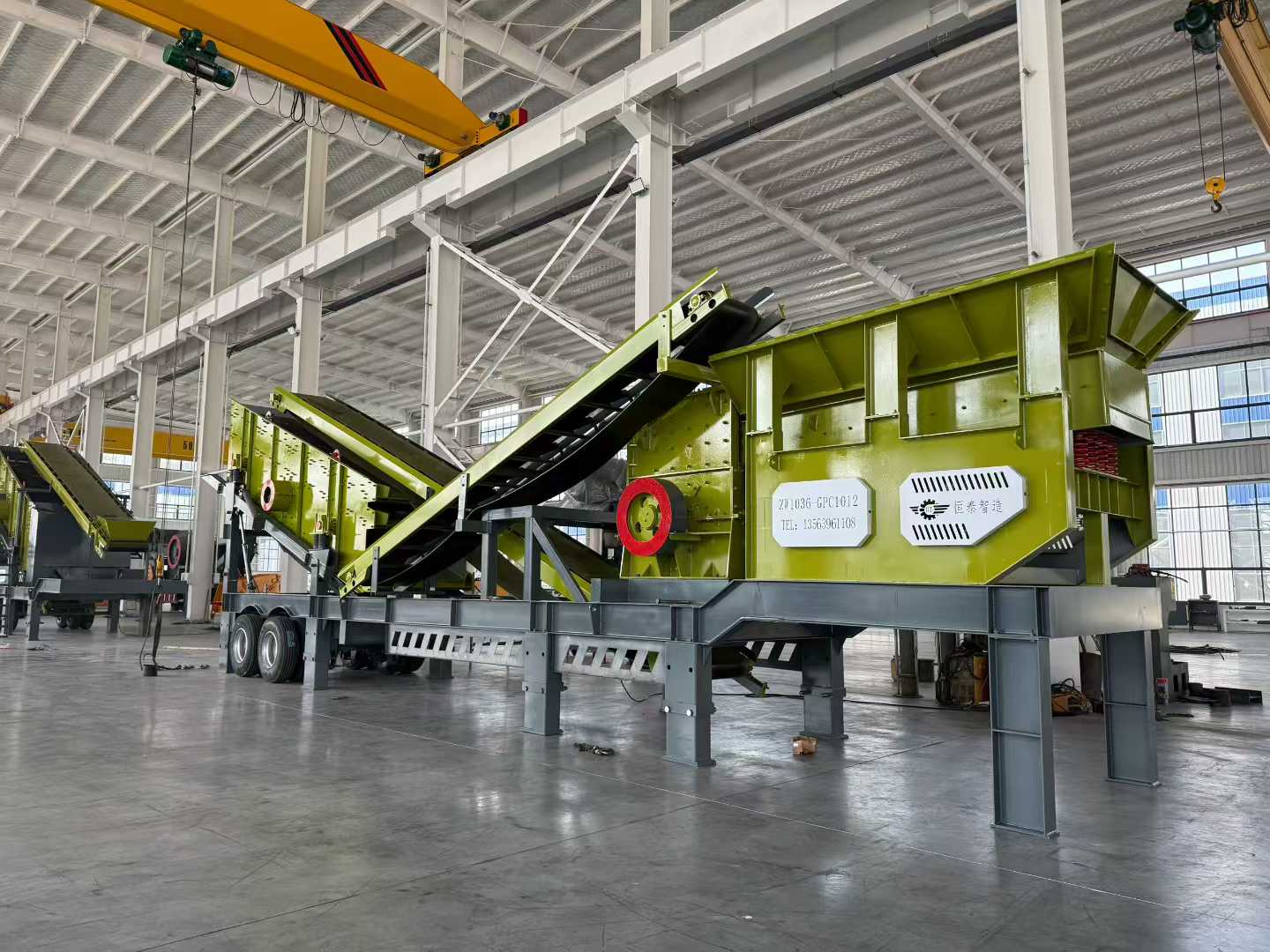
2.1 The Core Question: How Does the Trough Move in a Straight Line?
You might wonder:
If a motor rotates in circles, how does that create straight-line back-and-forth vibration in the trough?
The answer lies in two eccentric shafts.
2.2 What Does “Eccentric” Mean? — A Simple Everyday Example
Eccentric = Off-center
Imagine:
A normal wheel: The shaft is exactly at the center. It rotates smoothly.
An eccentric wheel: The shaft is offset from the center. As it rotates, it moves up and down unevenly.
Inside a ZW feeder, there are two such eccentric shafts, rotating side by side—like two “bumpy wheels” spinning together.
2.3 Why Do Two Shafts Rotating in Opposite Directions Create Linear Motion?
The key design feature: the two shafts rotate in opposite directions.
Top view (simplified explanation):
Left shaft rotates clockwise → generates an upward-right force
Right shaft rotates counterclockwise → generates a downward-right force
Result:
Vertical forces cancel each other out
Horizontal forces combine
Final outcome:
A pure forward linear force.
Analogy:
Imagine two people standing on opposite sides of a boat. One pushes forward on the left side, the other pushes forward on the right side. The boat moves straight ahead without turning.
2.4 Why Do Materials Continuously “Hop” Forward?
Although the material appears to move smoothly, it actually advances in tiny repeated jumps. The cycle happens too quickly for the naked eye to notice.
The Four-Stage Cycle
1. Lift-Off Stage
The trough suddenly accelerates upward. The material is tossed slightly into the air and separates from the trough surface.
2. Flight Stage
While the trough moves backward, the material continues moving forward in the air due to inertia.
3. Landing Stage
The trough moves forward again and catches the material—but now the material has already shifted forward slightly.
4. Reset Stage
The trough briefly stabilizes. The material settles and prepares for the next lift-off.
Result:
The material seems to flow continuously, but in reality, it moves forward in rapid micro-jumps.
2.5 The Role of the V-Belt — More Than Just Power Transmission
The ZW feeder uses a V-belt drive to connect the motor and eccentric shafts, instead of a rigid coupling. Why?
| Direct Coupling (Rigid Connection) | V-Belt Drive (Flexible Connection) |
|---|---|
| Motor and shaft are rigidly fixed | Provides elastic buffering |
| If a stone jams, the motor may stall instantly and burn out | Belt slipping protects the motor |
| Vibration transfers directly back to the motor, shortening bearing life | Belt absorbs vibration, extending motor lifespan |
Conclusion:
The V-belt acts as both a fuse and a shock absorber.
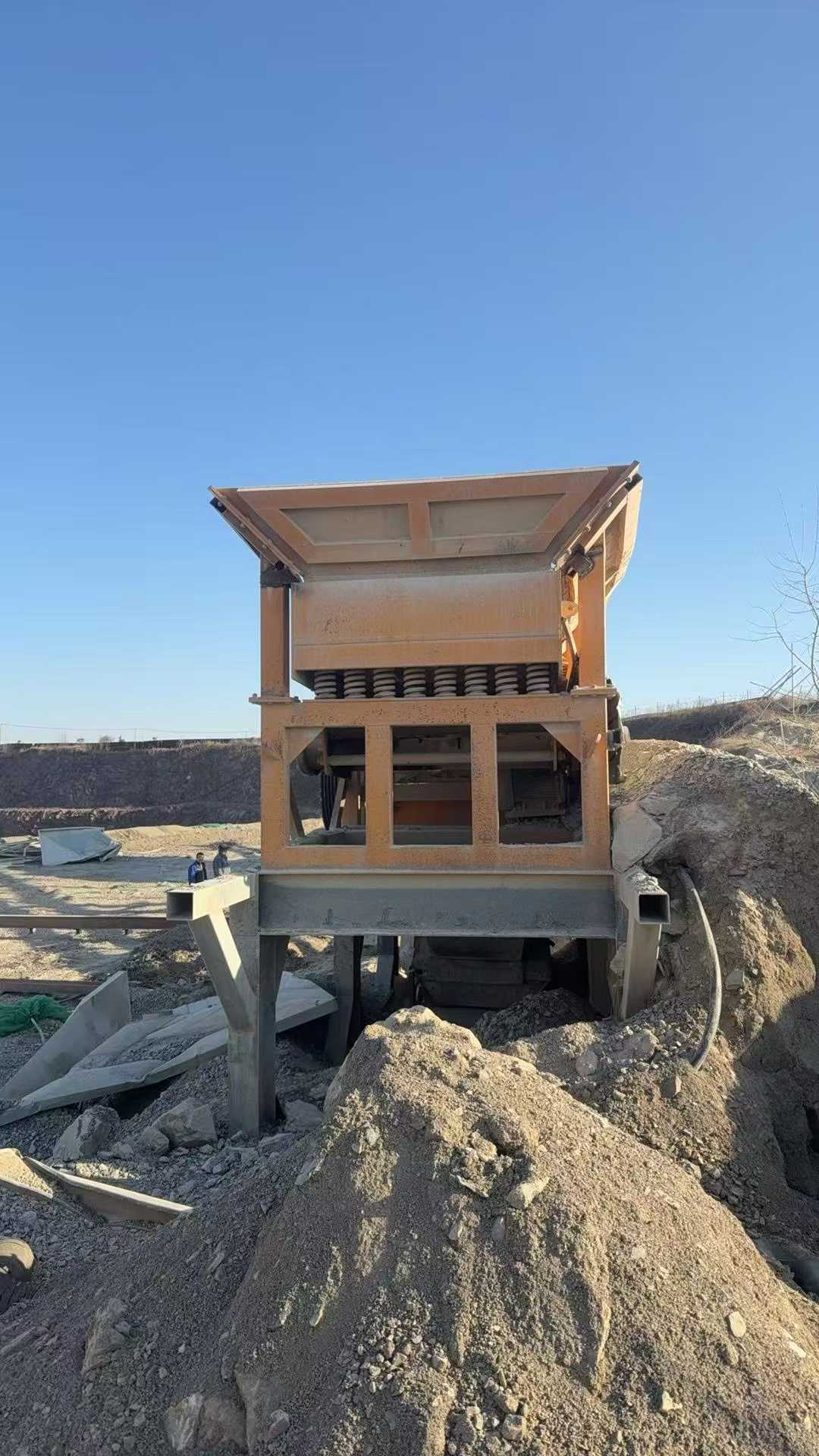
2.6 The Three Key Vibration Factors — Essential for On-Site Adjustment
Even without formulas, operators must understand these three parameters:
| Factor | How to Adjust | If Too Large | If Too Small |
|---|---|---|---|
| Amplitude (How High It Jumps) | Adjust eccentric block angle on the shaft | Excessive bouncing, unstable equipment | Insufficient movement, large stones won’t advance |
| Frequency (How Fast It Vibrates) | Change motor speed or use a variable frequency drive | Faster wear, higher noise | Low output, possible material buildup |
| Direction Angle (Vibration Direction) | Adjust motor installation angle | Too steep: stones jump too high | Too flat: slow conveying speed |
2.7 Common Issues and Their Mechanical Causes
| Symptom | Possible Cause | Quick Check |
|---|---|---|
| Material does not move forward | Amplitude too small or loose belt | Observe jump height; listen for dull motor sound |
| Material moves sideways | Uneven amplitude on both sides | Check whether both sides jump to the same height |
| Excessive equipment shaking | Loose anchor bolts or damaged springs | Inspect foundation bolts and springs |
| Impact noises | Oversized stones or trough deformation | Measure stone size; inspect trough surface |
Conclusion
Once you understand these principles, on-site adjustment and troubleshooting become far more intuitive and manageable.
Next Article Preview:
“Why Choose a Linear Type? A Visual Comparison Between ZW Feeders and Other Feeder Types”