Why Choose Linear Type? — ZW Feeder vs. Other Feeder Types
Why Choose Linear Type? — ZW Feeder vs. Other Feeder Types
Meta Description:
What’s the difference between linear, electromagnetic, reciprocating, and circular vibrating feeders? Through practical comparisons and real-world scenarios, understand why the ZW linear feeder is better suited for aggregate production lines.
3.1 Quick Overview of Four Feeder Types
| Type | Drive Method | Motion Pattern | Comparable Tool |
|---|---|---|---|
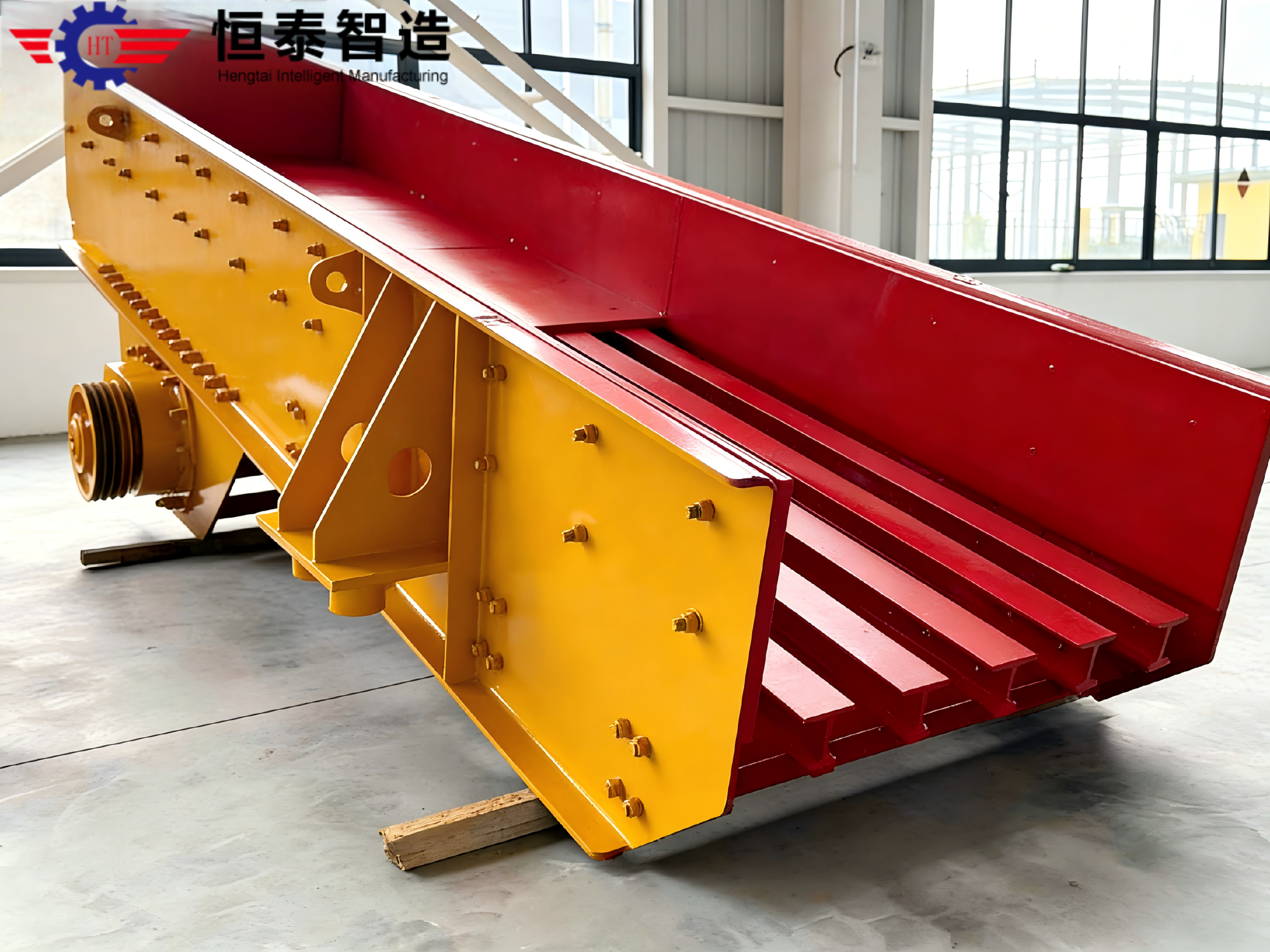
| ZW Linear Type | Dual eccentric shafts + V-belt | Straight-line reciprocating motion | Shaking material forward with a dustpan |
| Electromagnetic | Electromagnetic attraction | Small, high-frequency vibration | Smartphone vibration motor |
| Reciprocating | Crank-link mechanism | Push-pull motion | Syringe plunger |
| Circular Vibrating | Single eccentric shaft | Circular motion | Washing machine spin cycle |
3.2 ZW Linear vs. Electromagnetic — Strongman vs. Precision Needle
Electromagnetic Feeder Characteristics
Very small amplitude (0.5–2 mm)
Very high frequency (50–100 vibrations per second)
Similar to phone vibration
Suitable for fine powders or food additives
Limited force—large stones will not move
Practical Comparison
| Scenario | Electromagnetic | ZW Linear |
|---|---|---|
| Feeding 500 mm granite blocks | ❌ Not feasible | ✅ Easily handled |
| 300 tons per hour capacity | ❌ Beyond capability | ✅ Standard capacity |
| Outdoor quarry environment | ❌ Sensitive to dust and moisture | ✅ Enclosed design, suitable for harsh environments |
| ±1 kg precision dosing | ✅ Extremely precise | ⚠️ Around ±5% accuracy |
Conclusion:
Using an electromagnetic feeder in aggregate production is like asking a small pony to pull a heavy cart. The ZW linear feeder is the proper solution.
3.3 ZW Linear vs. Reciprocating — Automatic vs. Manual Transmission
Reciprocating Feeder Characteristics
Works like an engine piston—push and pull
Strong force, capable of moving extremely large blocks (>1 meter)
Higher mechanical wear, similar to older steam machinery
Requires frequent maintenance
Five-Year Lifecycle Comparison
(200 t/h capacity)
| Cost Item | ZW Linear | Reciprocating | Difference |
|---|---|---|---|
| Equipment Purchase | CNY120,000 | CNY80,000 | Reciprocating cheaper by CNY40,000 |
| 5-Year Electricity | CNY80,000 | CNY120,000 | ZW saves CNY40,000 |
| 5-Year Maintenance | CNY30,000 | CNY80,000 | ZW saves CNY50,000 |
| Downtime Loss | CNY20,000 | CNY50,000 | ZW saves CNY30,000 |
| Total (5 Years) | CNY250,000 | CNY330,000 | ZW saves CNY80,000 |
Key Insight:
Lower upfront cost often leads to higher long-term expenses. The ZW linear feeder has a simpler structure and lower maintenance demands, making it more economical over time.
3.4 ZW Linear vs. Circular Vibrating — Precision Shooter vs. Scatter Shot
Circular Vibrating Feeder Characteristics
Single shaft rotating in circular motion
Material moves in a spiral path
Can feed and screen simultaneously
Lower feeding accuracy
Materials tend to drift sideways
Operational Comparison
| Issue | Circular Type | ZW Linear |
|---|---|---|
| Uneven crusher feeding due to material drift | Common | Rare |
| Localized trough wear | Severe (uneven force distribution) | Even wear (linear force distribution) |
| Integration with automation systems | Difficult (flow fluctuates) | Easy (stable flow rate) |
Selection Recommendation
Choose ZW linear type when precise feed control is required (especially when coordinating with crusher load control systems).
Choose circular type when only rough feeding and simple screening are needed and cost is the primary concern.
3.5 Key Advantages of the ZW Linear Feeder
Summarized in five keywords:
| Keyword | Explanation | Customer Benefit |
|---|---|---|
| Stable | Dual-shaft self-synchronization prevents material drift | Even crusher feeding, reduced equipment stress |
| Fast | Throwing motion enables high conveying speed | Higher capacity, less backlog |
| Efficient | V-belt transmission with low energy consumption | Up to 20% electricity savings |
| Simple | Straightforward structure, fewer wear parts | Easier maintenance |
| Durable | Wear-resistant design | Longer replacement cycle |
3.6 Equipment Selection Flowchart (Non-Technical Version)
Start
  ↓
Are there large stones (>50 cm)?
  → Yes → Choose ZW type or apron feeder
  ↓ No
Is precise feed control required?
  → Yes → Choose ZW type
  ↓ No
Is the budget extremely tight and frequent maintenance acceptable?
  → Yes → Choose reciprocating type
  ↓ No
Choose ZW linear type (most worry-free option)
Conclusion
In aggregate production applications, the ZW linear feeder is an all-around performer:
Stronger than electromagnetic feeders
More cost-effective long term than reciprocating feeders
More precise than circular vibrating feeders
While it may not always be the cheapest upfront option, its long-term operational stability and economic efficiency make it the best overall choice.