
Core Parts of Vertical Shaft Impactor (VSI)
High Wear Resistance · High Stability · Compatible with All Mainstream VSI Sand Making Equipment
Product Overview
Vertical Shaft Impactor (VSI) core parts are the critical wear components that directly determine sand making efficiency, finished product particle shape, equipment operational stability, and overall production costs. In high-intensity sand production environments processing granite, basalt, quartzite, and river pebbles, inferior wear parts lead to frequent shutdowns for replacement, uneven particle distribution, and excessive spare parts expenditure—directly impacting profitability.
Shandong Hengtai Intelligent Manufacturing delivers a complete range of OEM-compatible VSI core components, precision-engineered from high-chromium alloy (Cr26, Cr28), high manganese steel (Mn13, Mn18), and tungsten carbide insert materials. Each component undergoes rigorous quality control including spectrometric analysis, hardness testing (HRC 60+ for high-chromium parts), and dynamic balance verification. Our VSI parts are compatible with all mainstream vertical shaft impactor models—both domestic and international brands—ensuring perfect fit, extended service life (2-3x longer than standard parts), and reduced total cost of ownership for quarry and aggregate operations worldwide.
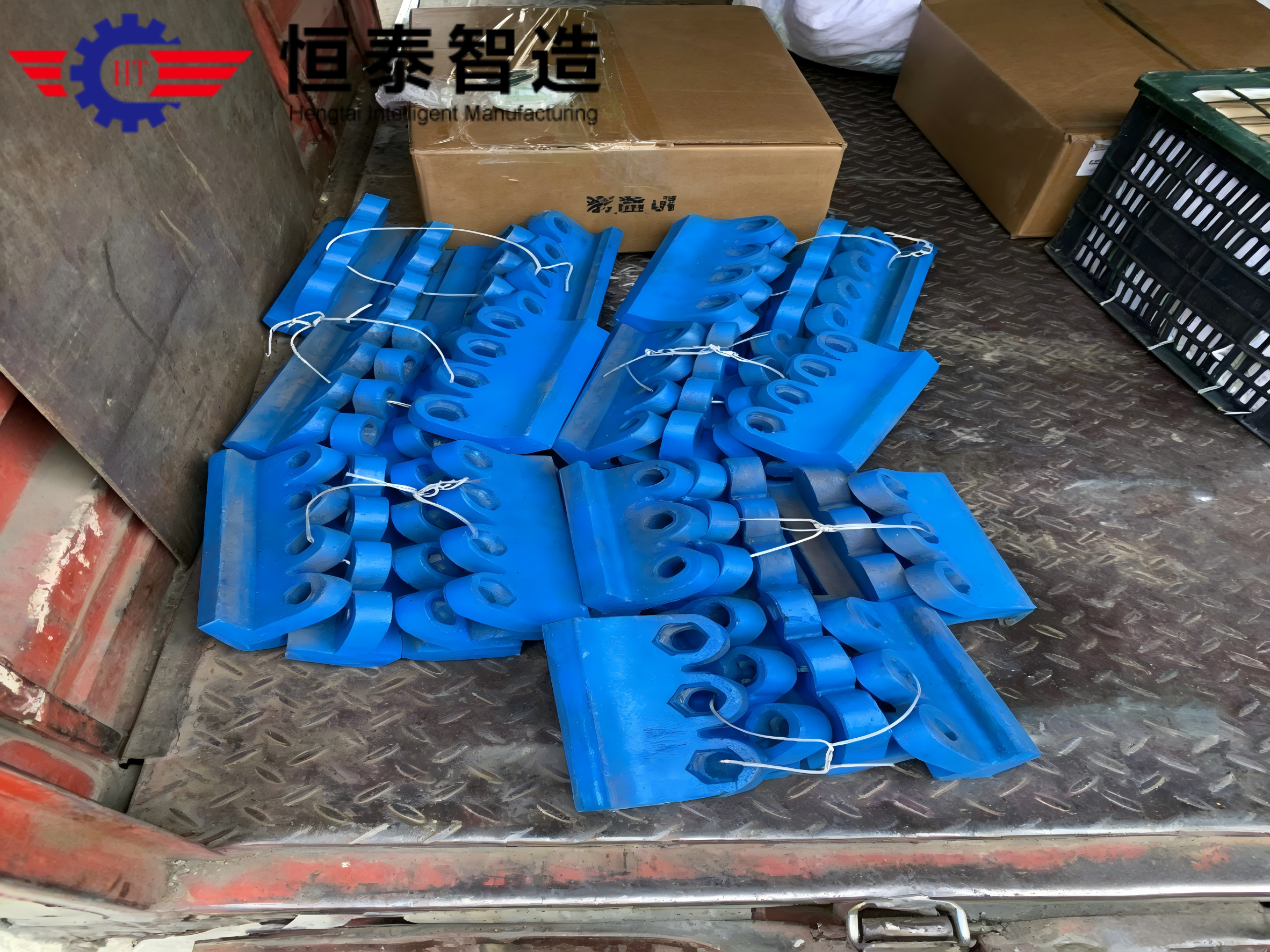
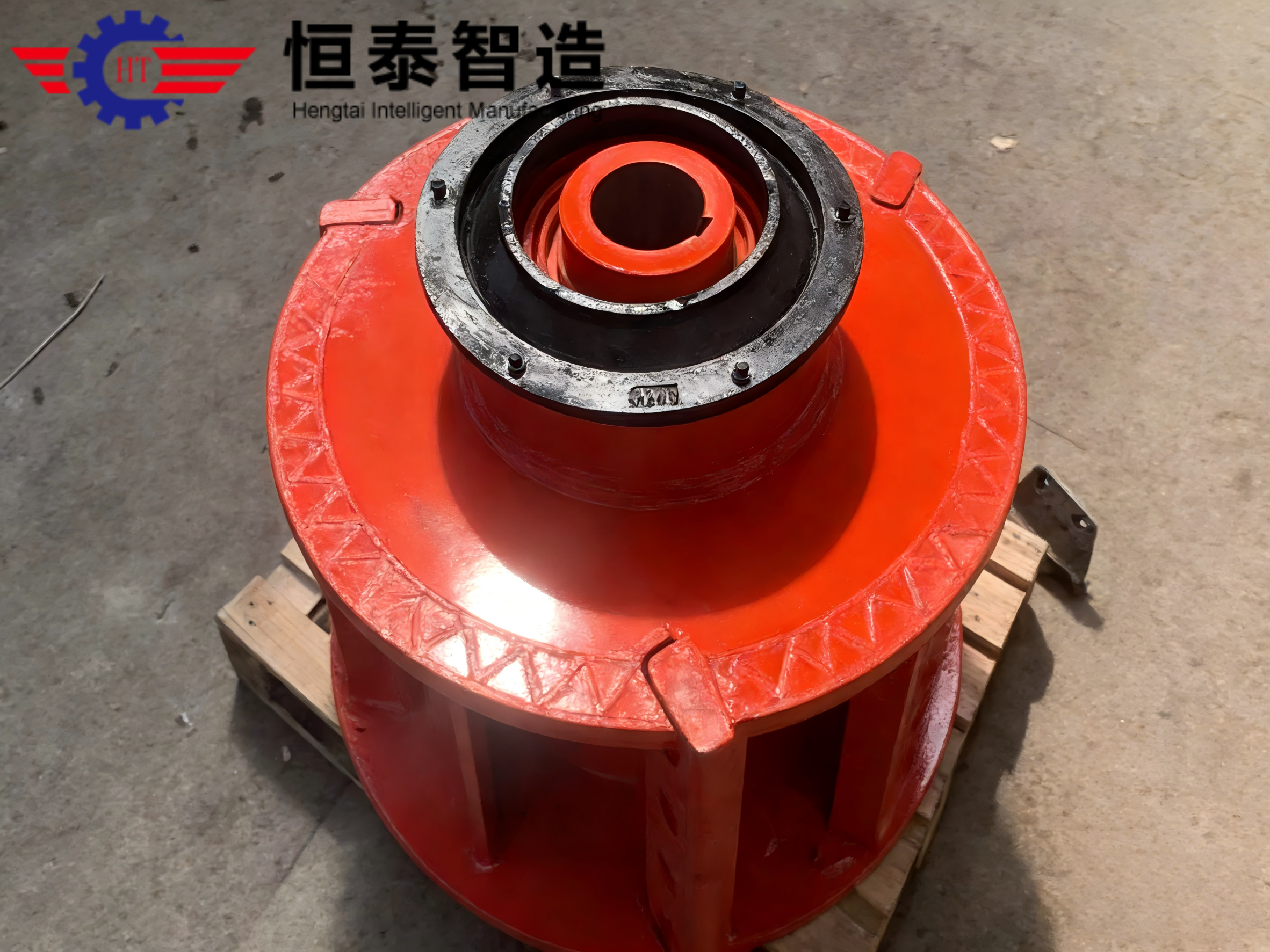
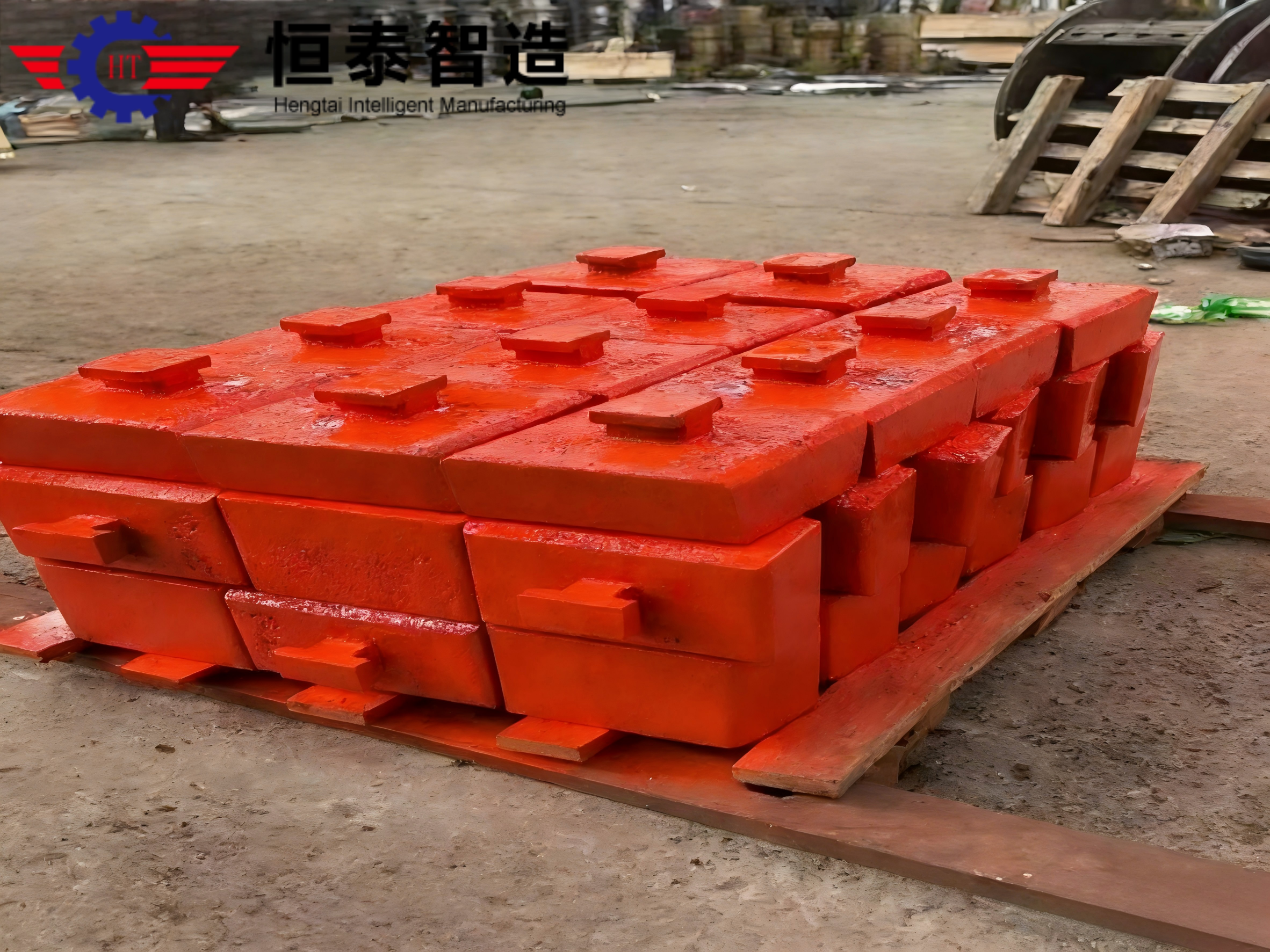
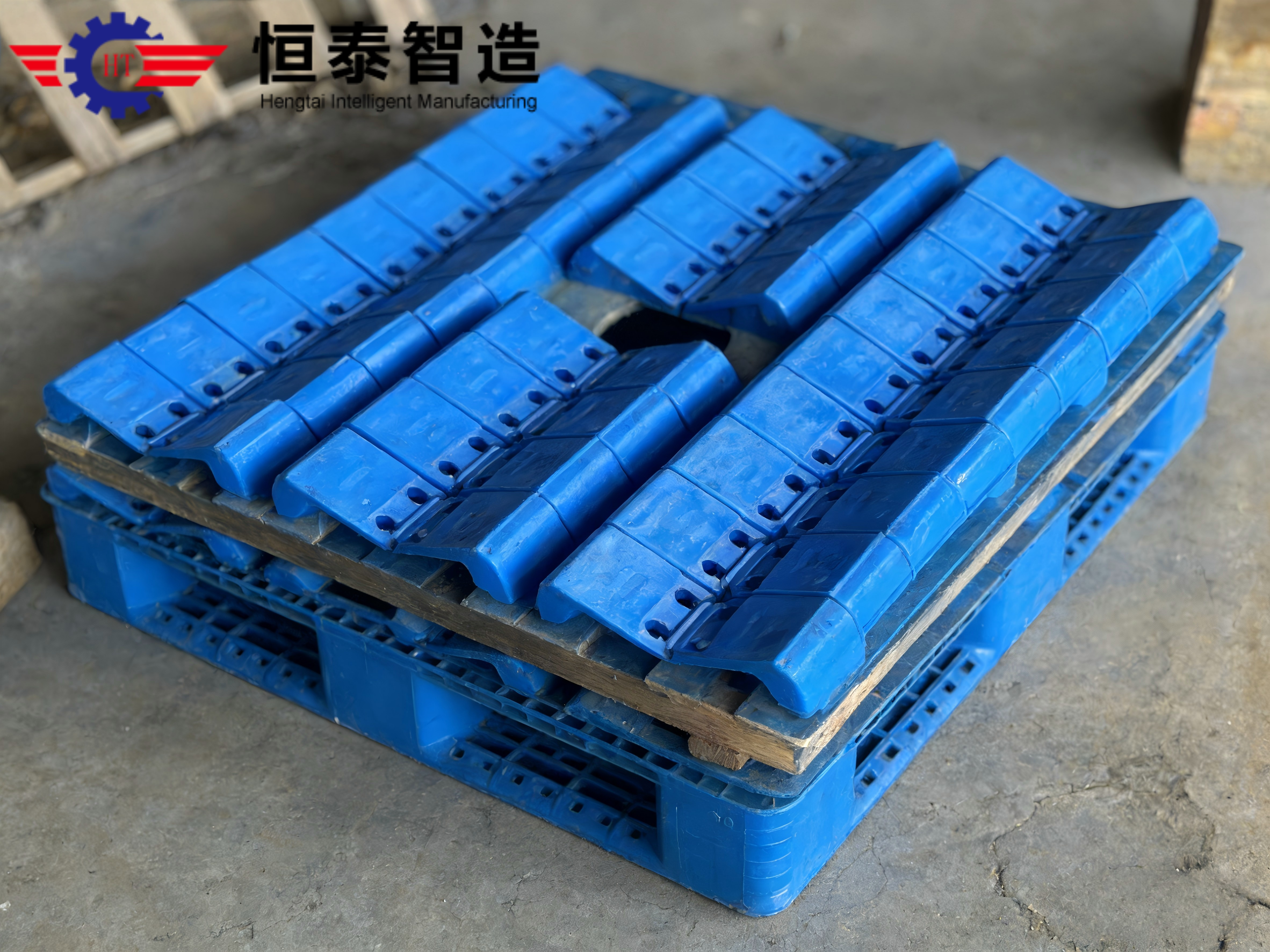
Core Parts Details & Technical Specifications
1. VSI Impeller
Primary Function: The central rotating component that accelerates feed material to 60-80 m/s circumferential velocity and propels it against guard plates and impact blocks for "rock-on-rock" and "rock-on-iron" crushing. Directly determines sand production capacity (typically 30-500 t/h depending on model) and particle shape (cubical vs. flaky).
Material Options:
• Standard: High manganese steel (Mn13, Mn18) - HRC 50-55, good impact toughness
• Premium: High-chromium alloy (Cr26, Cr28) - HRC 60-65, 2-3x wear life
• Ultra: Tungsten carbide insert tips - 5x wear life for extreme abrasion
Key Performance Factors:
• Three-port or four-port design for optimal material distribution
• Dynamic balance grade G2.5 (ISO 1940) for vibration-free operation
• Replaceable liner plates for extended core life
Maintenance Guidelines: Inspect every 200 operating hours for wear patterns, cracks, and bolt torque (should be 280-320 N·m). Prevent uneven feeding (max deviation <15%) to maintain dynamic balance. Exclude metallic contaminants >10mm. Replace liner plates when wear exceeds 50% of original thickness.
2. Throwing Head (Rotor Tip)
Primary Function: Mounted on impeller periphery as the direct material contact and high-velocity ejection component. Each throwing head endures 5000-8000 impacts per hour at velocities up to 80 m/s. Wear resistance directly influences sand output consistency and consumable replacement frequency.
Material Options:
• Standard: Cr26 high-chromium white iron - HRC 62-65, 400-600 hours life (granite)
• Premium: Cr28MoNi with rare earth - HRC 63-66, 600-900 hours life
• Ultra: Tungsten carbide (WC) brazed inserts - 1200-1800 hours life
Design Features:
• Symmetrical geometry for reversible use (double service life)
• Optimized attack angle (35-45°) for maximum kinetic energy transfer
• Precision mounting system (H7/g6 fit) prevents loosening under cyclic loading
Maintenance Guidelines: Replace when wear exceeds 1/3 of original thickness (typically 25-30mm), or when cracks >5mm appear. Check every 100 hours for high-abrasion materials (quartzite, granite). Maintain complete set replacement to prevent rotor imbalance (vibration limit <4.5 mm/s).
3. Upper Flow Guide Plate
Primary Function: Directs raw materials from feed hopper into impeller center uniformly, optimizing feed trajectory to prevent localized impeller wear and minimizing airflow turbulence that causes material blow-back and dust emission. Properly designed upper guide plate improves throughput by 10-15% and reduces impeller uneven wear by 40%.
Material & Design:
• Mn13 high manganese steel with work-hardening surface - HRC 45-55 after initial operation
• Adjustable installation angle (15-25°) for different material flow characteristics
• Replaceable wear strips at high-impact zones
Technical Parameters:
• Feed opening: 50-150mm (adjustable by application)
• Material velocity control: 2-4 m/s at plate surface
• Wear life: 800-1200 hours for medium-hardness materials
Maintenance Guidelines: Clear material buildup every 50 hours to prevent obstruction and uneven feeding. Monitor wear status monthly; replace when guiding surface wear exceeds 20mm or angle deviation >3°. Calibrate installation angle seasonally for wet/dry material variations.
4. Lower Flow Guide Plate
Primary Function: Collaborates with upper flow guide plate for secondary guidance of rebounded materials post-impeller ejection, creating multiple impact cycles for improved crushing efficiency (typically 3-5 impacts per particle). Protects machine body interior from direct high-velocity particle bombardment.
Material & Design:
• Composite structure: Cr26 wear face (HRC 62-65) + Mn13 impact-absorbing substrate
• Adjustable gap to impeller: 25-40mm (critical for performance)
• Modular design for segmented replacement of worn zones
Gap Management:
• Excessive gap (>50mm): Causes material backflow, 20-30% efficiency loss, increased recirculation load
• Insufficient gap (<20mm): Risk of collision damage to impeller or guide plate, catastrophic failure potential
• Optimal gap: 30-35mm for most sand making applications
Maintenance Guidelines: Check impeller-to-guide-plate gap weekly using feeler gauges. Adjust mounting position when gap changes >5mm from baseline. Replace when wear thickness reduces below 60% of original (typically 30-40mm original thickness). Prevent material accumulation >50mm depth on plate surface.
5. Circumferential Guard Plate
Primary Function: Installed inside VSI body circumference as the primary impact surface for "rock-on-rock" crushing. Absorbs high-velocity material impact (up to 80 m/s) to protect body shell while creating controlled rebound trajectory for particle self-crushing—critical for producing cubical sand particles with low flakiness index (<15%).
Material Options:
• Standard: Mn13 high manganese steel - work-hardens to HRC 55, 600-800 hours life
• Premium: Cr26 high-chromium alloy - HRC 62-65, 1000-1500 hours life
• Ultra: Composite ceramic-metal matrix - 2000+ hours life for quartzite processing
Design Features:
• Symmetrical hexagonal or octagonal profile for 2-4x rotation/reversal cycles
• 30-45° impact surface angle for optimal material rebound and particle shape
• Segmented construction (4-8 pieces) for individual replacement
Maintenance Guidelines: Install symmetrically with equal gaps (±2mm). Rotate 180° or reverse position every 300-400 hours to distribute wear evenly. Replace immediately upon perforation (hole >10mm) or when local wear exceeds 70% of thickness. Inspect fixing bolts (M20-M24, grade 10.9) every 100 hours; re-torque to 450-500 N·m if loosening detected.
Material Performance Comparison
| Material Grade | Hardness (HRC) | Impact Toughness | Service Life* (hrs) | Best For |
|---|---|---|---|---|
| Mn13 High Manganese | 45-55 (work-hardened) | High (>120 J/cm²) | 400-600 | Medium hardness, high impact |
| Cr26 High Chromium | 60-65 | Medium (80-100 J/cm²) | 800-1200 | High abrasion, moderate impact |
| Cr28MoNi + Rare Earth | 62-66 | Medium-High (90-110 J/cm²) | 1000-1500 | Extreme abrasion, granite/quartzite |
| Tungsten Carbide Insert | HRA 86-89 (tip) | High (brazed composite) | 1500-2500 | Ultra-hard materials, 24/7 operation |
* Service life data based on granite crushing (compressive strength 150-200 MPa) in standard VSI sand making machine. Actual life varies by material hardness, feed size, and operating parameters.
Compatible VSI Equipment Models
Hengtai VSI core parts are engineered for OEM compatibility with all mainstream vertical shaft impactor sand making machines, including:
Domestic Chinese Brands
- VSI-7611, VSI-8518, VSI-9526, VSI-1140 series
- 5X series (5X7615, 5X8522, 5X9532)
- VSI6X series (6X1040, 6X1150, 6X1263)
- PCL series (PCL-600, PCL-750, PCL-900)
- Custom domestic VSI models
International Brands
- Metso Barmac B-Series (B6150, B7150, B9100)
- Sandvik CV Series (CV218, CV228, CV229)
- Trio TV Series (TV85, TV95)
- Terex Canica (VSI 2000, VSI 2050)
- Custom international VSI models
Note: We provide custom manufacturing based on your equipment drawings, rotor dimensions, and operating conditions. Send us your part number or sample for precise replication with improved material specifications.
Frequently Asked Questions (FAQ)
Q1: What are the main core parts of the vertical shaft impactor?
The five main core parts are: impeller (central rotating component), throwing head/rotor tip (material ejection component), upper flow guide plate (feed distribution), lower flow guide plate (rebound material guidance), and circumferential guard plate (impact surface and body protection). These components work together to create the "rock-on-rock" and "rock-on-iron" crushing action that produces cubical sand particles. Each part has specific wear characteristics and replacement schedules critical to maintaining sand quality and production efficiency.
Q2: What is the function of the impeller in the vertical shaft impactor?
The impeller is the heart of the VSI crusher—a high-speed rotating component (typically 1000-1800 RPM) that accelerates feed material to 60-80 m/s circumferential velocity and propels it against the circumferential guard plates. This high-velocity collision achieves particle crushing through kinetic energy transfer rather than compression. Impeller design (three-port vs. four-port) directly determines throughput capacity (30-500 t/h), particle shape quality (flakiness index <15% for premium sand), and operational stability. Imbalanced or worn impellers cause vibration, bearing damage, and inconsistent sand output.
Q3: What are the most common problems of the impeller in daily use?
The most frequent issues are: (1) Uneven wear patterns caused by off-center feeding or material segregation—leads to dynamic imbalance and bearing overload; (2) Cracks at bolt holes or rib junctions from fatigue stress or metallic impurity impacts; (3) Loose mounting bolts due to vibration—requires torque checking every 100 hours; (4) Excessive liner wear (>50% thickness loss) delaying replacement causes accelerated core damage. Prevention: maintain central feeding, install metal detectors, and follow 200-hour inspection schedules.
Q4: Why is the replacement frequency of the throwing head relatively high?
The throwing head (rotor tip) is the highest-wear component in VSI crushers because it directly contacts and propels raw material at extreme velocities (60-80 m/s), enduring 5000-8000 high-frequency impacts per operating hour. For abrasive materials like granite and quartzite, throwing heads typically require replacement every 400-900 hours depending on material hardness and tip material grade. This makes it the primary consumable part affecting operational costs. Using premium Cr28MoNi or tungsten carbide insert tips can extend life to 1500+ hours, reducing replacement frequency by 60-70%.
Q5: How to judge that the throwing head needs to be replaced?
Replace throwing heads immediately when: (1) Wear exceeds 1/3 of original thickness (typically >10mm wear on 30mm original thickness); (2) Visible cracks >5mm appear on the working face or mounting base; (3) Deformation or chipping affects material ejection angle; (4) Vibration levels increase >4.5 mm/s indicating imbalance from uneven wear. Delayed replacement causes uneven material distribution, compromised sand particle shape (increased flakiness), accelerated guard plate wear, and potential catastrophic rotor damage from broken pieces entering the crushing chamber.
Q6: What is the main function of the upper flow guide plate?
The upper flow guide plate serves three critical functions: (1) Feed distribution—directs raw materials from the hopper into the impeller center uniformly, preventing off-center loading that causes uneven impeller wear and vibration; (2) Trajectory optimization—adjustable angle (15-25°) ensures material enters the impeller at optimal velocity and direction for maximum kinetic energy transfer; (3) Airflow management—minimizes turbulence and dust blow-back during material intake, improving working environment and reducing fines loss. Properly maintained guide plates improve throughput by 10-15% and extend impeller life by 40%.
Q7: What is the difference between the lower flow guide plate and the upper flow guide plate?
While both guide plates manage material flow, they serve different stages: The upper flow guide plate handles virgin feed material entering from the hopper, focusing on initial distribution and impeller centering. The lower flow guide plate manages materials after primary impeller ejection and first impact—guiding rebounded particles for secondary and tertiary crushing cycles (typically 3-5 impacts per particle). The lower plate operates in a higher-velocity environment (rebound speeds 40-60 m/s) and requires more frequent inspection. Both must maintain precise gap tolerances to the impeller (30-35mm optimal) to prevent backflow or collision damage.
Q8: Why is it necessary to focus on checking the gap between the flow guide plate and the impeller?
The guide plate-to-impeller gap is the most critical dimensional parameter in VSI operation: (1) Excessive gap (>50mm)—causes material backflow into the feed zone, creating recirculation loops that reduce efficiency by 20-30% and increase fines production; (2) Insufficient gap (<20mm)—risk of direct collision between impeller and guide plate, causing catastrophic damage to both components and potential machine destruction; (3) Uneven gap—causes asymmetric material distribution, rotor imbalance, and bearing overload. Check weekly with feeler gauges; maintain 30-35mm for standard sand making. Adjust mounting position immediately if deviation exceeds ±5mm.
Q9: What is the function of the circumferential guard plate in the sand making process?
The circumferential guard plate performs dual functions: (1) Impact surface for particle crushing—creates the controlled "rock-on-rock" crushing environment where high-velocity particles (60-80 m/s) collide with the plate surface and rebound for multiple impact cycles, achieving size reduction through self-crushing rather than metal-to-rock contact; (2) Body shell protection—absorbs impact energy that would otherwise damage the VSI machine body, preventing costly structural repairs. The 30-45° plate angle is precisely engineered to optimize rebound trajectory for cubical particle shape (flakiness index <15%) and minimal oversize generation.
Q10: Can the circumferential guard plate be reversed or rotated for use?
Yes—this is a key design advantage. Hengtai circumferential guard plates are manufactured with symmetrical hexagonal or octagonal profiles, allowing 180° reversal and 90°/120° rotation (depending on segment count). This enables 2-4 complete wear cycles before replacement, effectively extending service life by 200-400% compared to single-orientation designs. Recommended practice: rotate segments every 300-400 operating hours to distribute wear evenly. Mark segments with paint or engraving to track rotation history. Always maintain symmetrical configuration—replace opposite segments simultaneously to prevent rotor imbalance.
Q11: Can the core parts be customized according to different sand making machine models?
Yes, full OEM customization is our core capability. We manufacture VSI core parts for all mainstream models including Metso Barmac, Sandvik CV, Trio TV, Terex Canica, and domestic Chinese VSI series. Customization options include: (1) Dimensional matching—precise replication from drawings or physical samples; (2) Material upgrade—standard Mn13 can be upgraded to Cr26 or tungsten carbide for extended life; (3) Design optimization—improved geometries based on your specific material characteristics; (4) Single-piece prototyping—test compatibility before batch order. Typical custom production time: 15-25 days for standard parts, 25-40 days for complex geometries.
Q12: How to extend the service life of the core parts of the vertical shaft impactor?
Maximize VSI core part lifespan with these proven practices: (1) Metal detection—install magnetic separators and metal detectors upstream to prevent tramp metal damage; (2) Uniform feeding—use vibrating feeders with variable speed control, maintain central feed position (deviation <15%), and prevent surge loading; (3) Scheduled inspections—100-hour checks for throwing heads, 200-hour for impeller liners, 400-hour for guard plates; (4) Timely replacement—replace worn parts at 50% thickness loss, not after failure; (5) Material-appropriate material selection—use Cr26/Cr28 for granite/quartzite, Mn13 for limestone; (6) Proper gap maintenance—check guide plate gaps weekly. These measures typically extend overall part life by 40-60% and reduce unplanned downtime by 80%.
Contact Us
For Customization Quotation, Model Matching or Technical Support of VSI Core Parts
Phone/WhatsApp: +86 182 8866 4797 (Ni Bin)
Email: ht6234nibin@gmail.com
Address: Intelligent Equipment Manufacturing Industrial Park, Linyi High-tech Zone, Linyi City, Shandong Province, China
Service Commitment: Free Technical Consultation | OEM Drawing Replication | Material Upgrade Advice | Sample Testing Support
Warranty: Material Defect Warranty | Fit Guarantee | On-time Delivery | 10-Year Parts Availability