
Maximizing Hourly Tonnage: A Synergy Guide to Optimizing Cone Crusher Feed and Circuit Flow
Maximizing Hourly Tonnage: A Synergy Guide to Optimizing Cone Crusher Feed and Circuit Flow
The actual production capacity of your cone crusher does more than measure single-machine efficiency—it directly dictates the final hourly tonnage of your entire quarry operation. As emphasized in our previous technical analyses covering structural maintenance and precise motor pairing, a machine with clean oilways and an accurately balanced powertrain serves as your healthy operational baseline. However, if your goal is to extract the absolute maximum throughput per hour, you must expand your focus from single-machine mechanics to comprehensive material flow control, upstream hopper storage, and circuit-wide synchronization.
The Power of Choke Feeding and Surge Pocket Control
A continuous, uninterrupted material supply is the absolute lifeblood of high-capacity cone crushing. A frequent mistake in aggregate lines is intermittent feeding, which forces the crusher to cycle between empty idling and sudden, overwhelming material surges. This erratic flow pattern causes the rocks to crash directly against the manganese liners, creating uneven mantle wear and a high percentage of flat, elongated product.
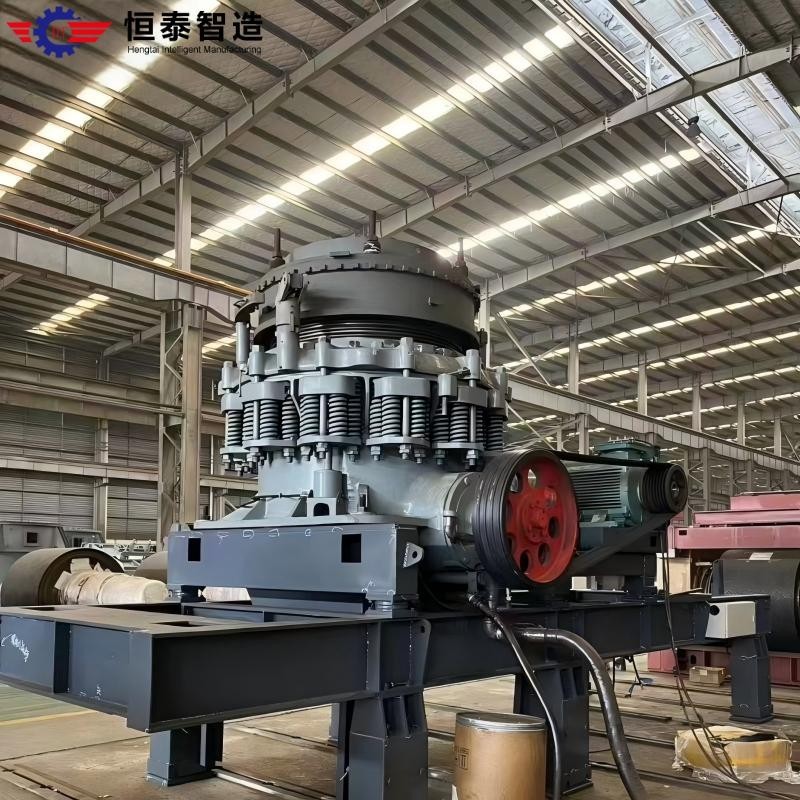
By optimizing an intermediate surge hopper and utilizing automated vibratory feeders upstream, operators can maintain a state of permanent "Choke Feeding"—keeping the crushing cavity completely filled at all times. This full-cavity pressure forces active inter-particle crushing (rock crushing rock). This process not only pushes the machine's hourly tonnage to its absolute limit but also drastically optimizes the cubical shape of the aggregate, ensuring it passes strict international concrete standards.
Feed Particle Limits and Moisture Regulation at the Source
The physical characteristics of the incoming rock feed place an unyielding ceiling on total capacity. Plant operators must strictly police the discharge opening of the primary jaw crusher to guarantee that no oversized boulders bypass the circuit and enter the cone chamber. Eliminating un-crushable sizes prevents mechanical bridging at the feed throat, protecting the Mn18Cr2 mantle and concave from severe localized impact damage.
Simultaneously, close attention must be paid to the moisture content and sticky clay percentage of the blast rock. High moisture combined with fine soil causes material to stick inside the parallel zone, severely reducing the available discharge area. Keeping the incoming material clean and ensuring adequate open area in your secondary screening setup is the fastest way to maintain stable, high-speed discharge.
Predictive Performance Tracking and Lifetime Retrofitting
To keep your hourly capacity high and stable, your engineering team must transition from reactive repairs to predictive asset management. By maintaining precise digital logs of daily motor current fluctuations, oil temperature shifts, and liner wear cycles, you can schedule parts replacement long before a minor structural weakness causes a catastrophic line shutdown.
(To review how customized standard, medium, and short-head cavities fit into a complete hard rock circuit, read our foundation design blueprint: [Beyond Steel Thickness: Maximizing Spring Cone Crusher Lifespan and Circuit Synergy].)
Corporate Contact Desk:
Official Business Email: ht6234nibin@gmail.com
Corporate Website: https://hengtai-global.com/
Instant WhatsApp Communication: Connect with our project engineering desk via WhatsApp at +86 18288664797 for instant layout consultations.