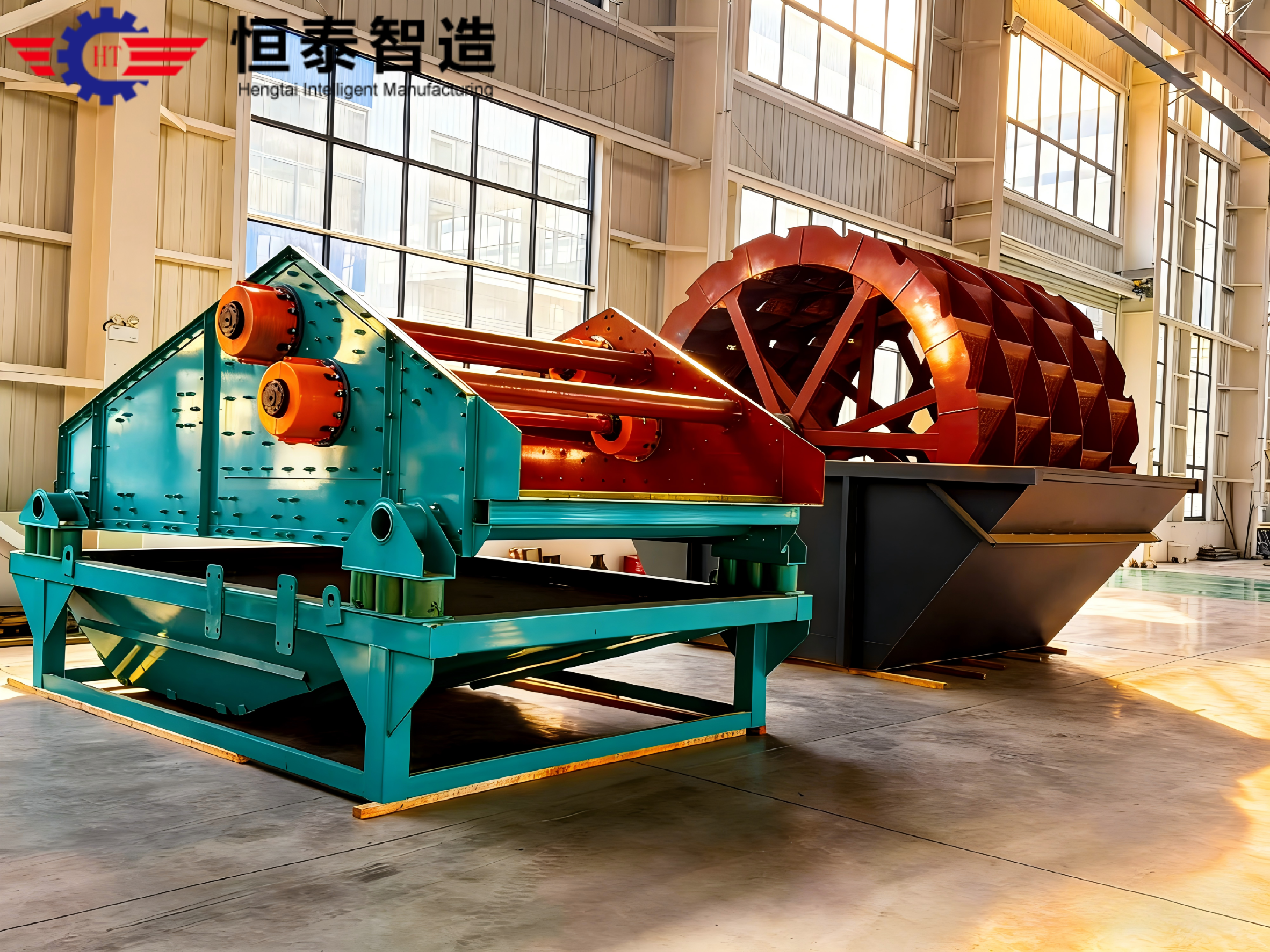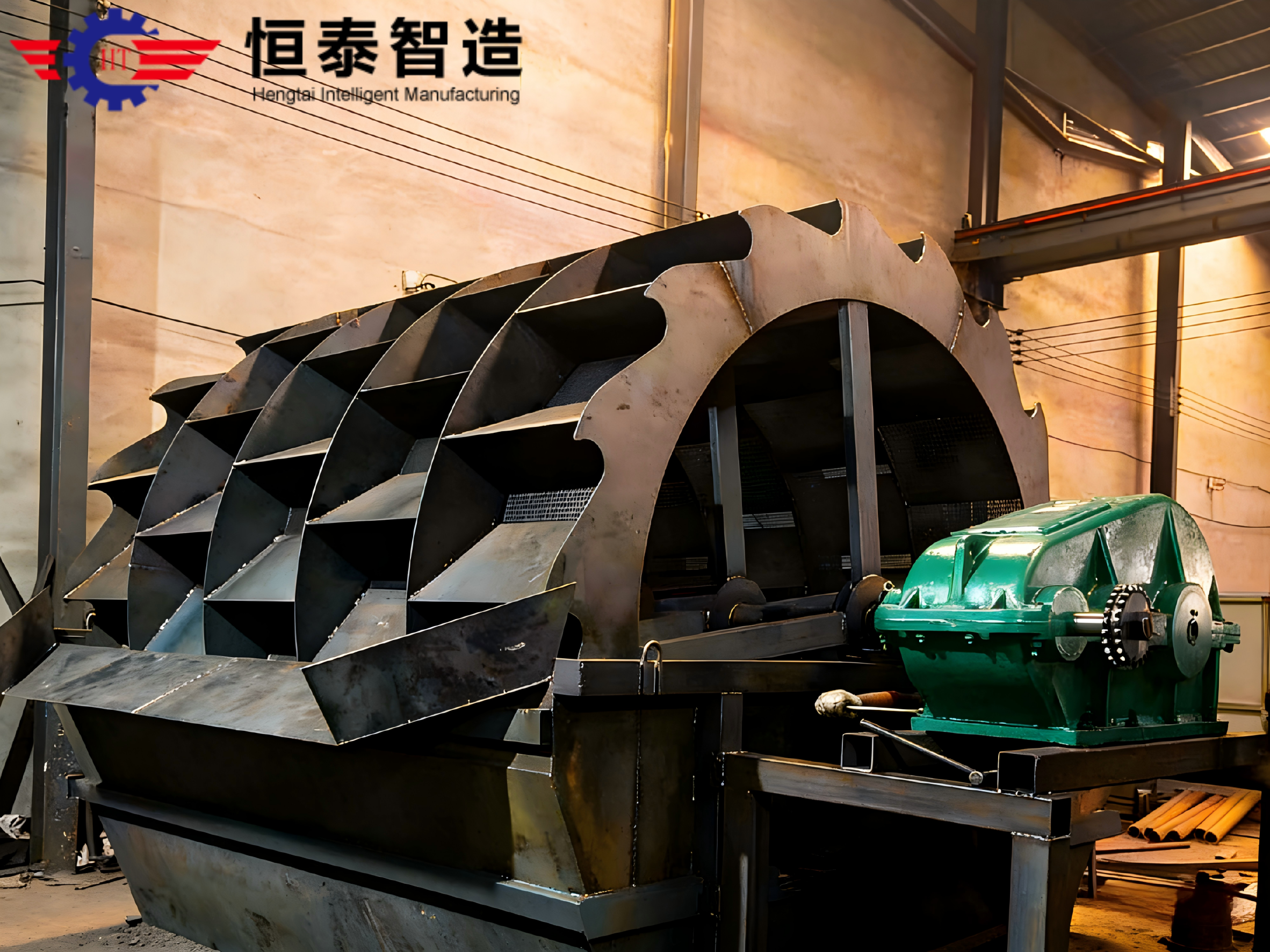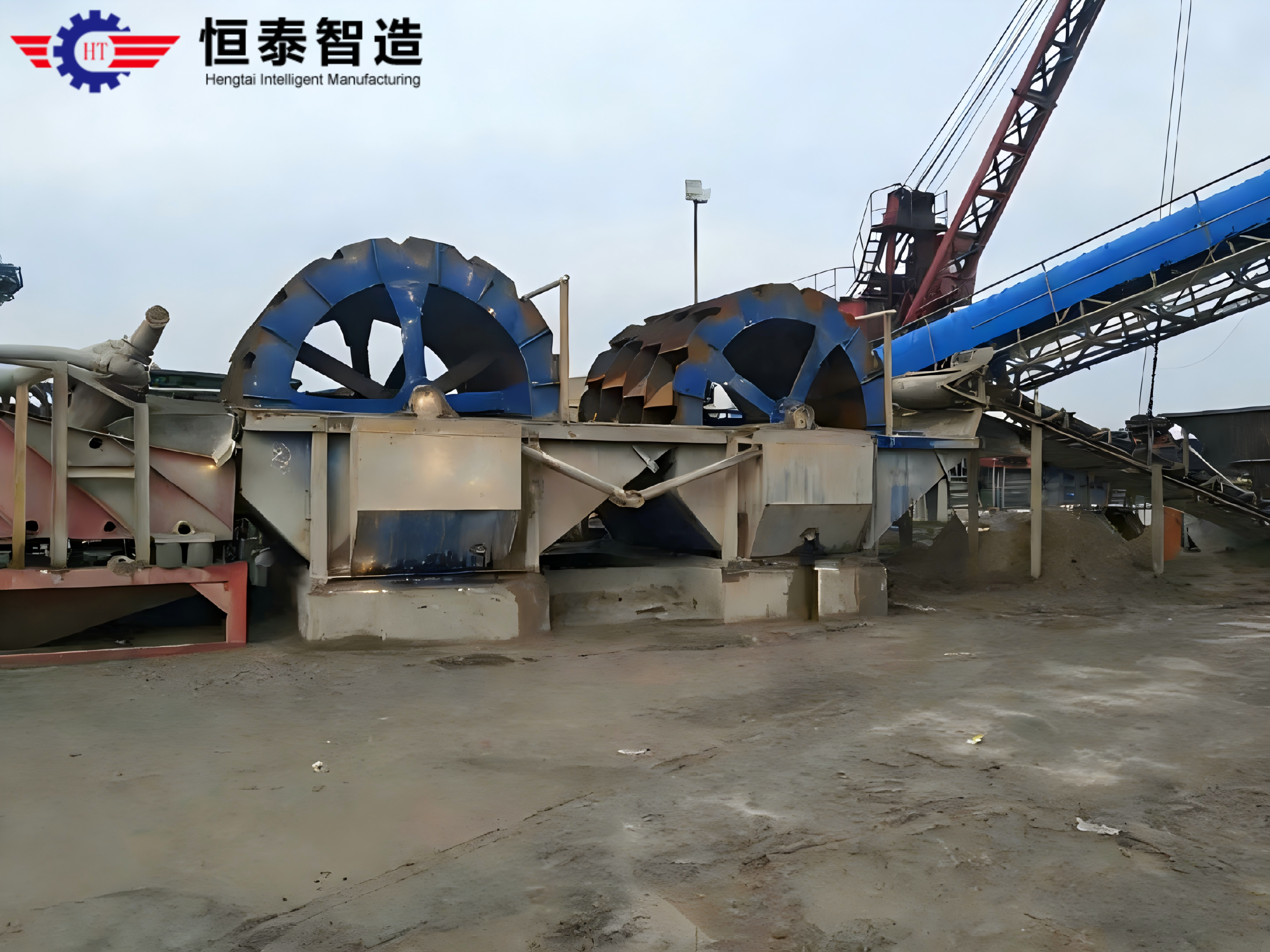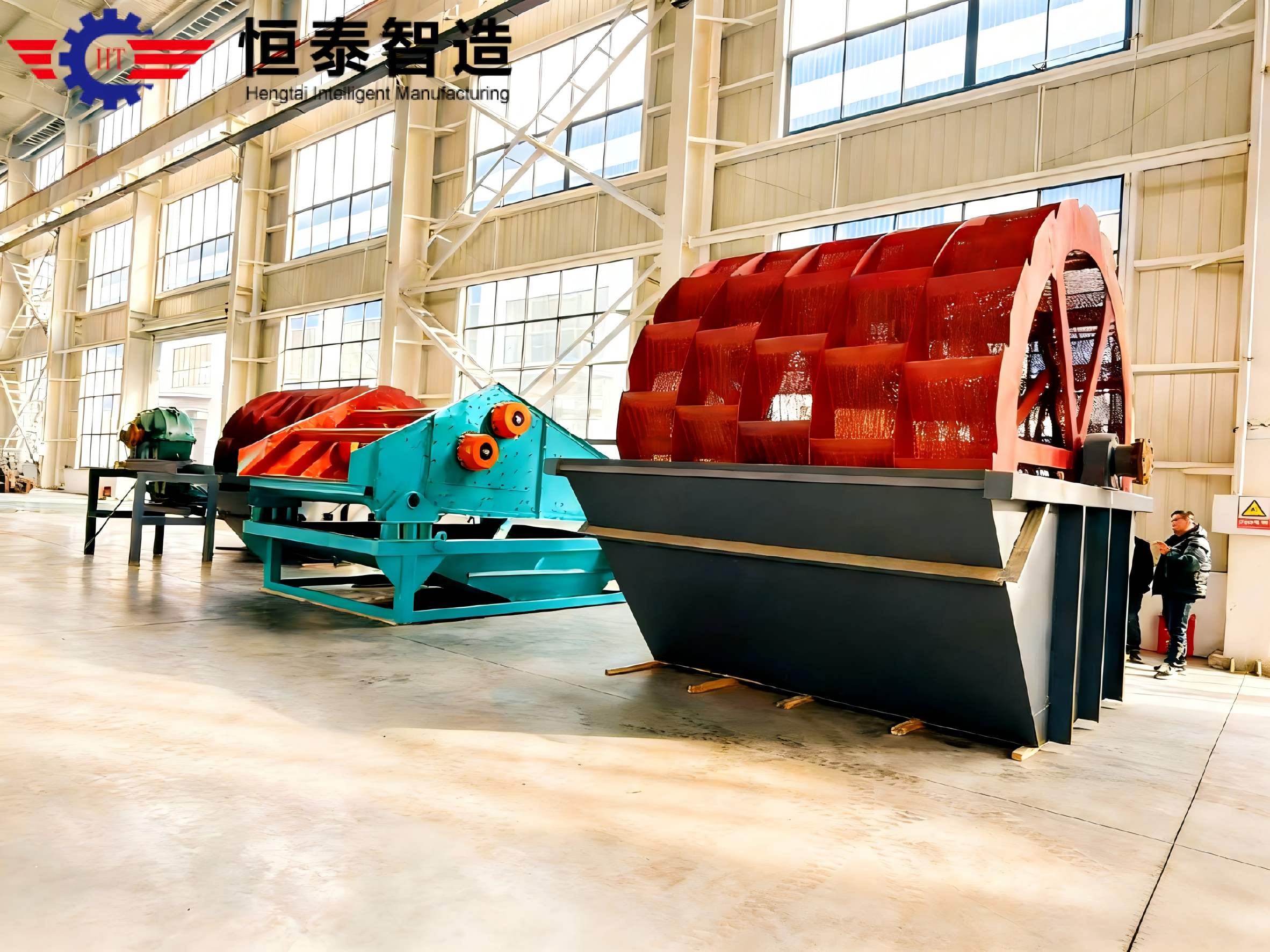
High-Efficiency Impeller Sand Washing Machine for Manufactured Sand Purification
20-180
Capacity (t/h)
30%
Water Savings
<1%
Mud Content
ISO 9001
Certified Quality
Product Overview & Core Advantages
The XS Series Wheel Sand Washer (also known as Bucket Wheel Sand Washer or Impeller Sand Washer) is designed for operators who need reliable sand cleaning with minimal water consumption and maintenance. Unlike complex screw-type washers, our bucket wheel design uses a simple yet effective principle: rotating buckets scoop sand from the tank, tumble it with water to remove impurities, and return clean sand—all with 30% less water than conventional methods.
This makes it the ideal choice for sand and gravel operations in water-scarce regions like Africa, Middle East, and Central Asia, as well as for concrete batching plants and construction projects where low operating costs and high availability are critical. The sealed bearing design means no contact between bearings and abrasive sand/water mixture, resulting in 3-5 year bearing life and minimal downtime.
Why Choose Bucket Wheel Over Screw Type?
Comparison
Wheel Sand Washer (XS Series)
Screw Sand Washer (FG Series)
Water Consumption
30% less (0.8-1.2 t/t sand)
Higher (1.5-2 t/t sand)
Structure
Simple, few wearing parts
Complex, screw blades wear
Maintenance
Minimal, bearings last 3-5 years
Regular blade replacement
Best For
Medium sand (0.5-10mm), low clay
Fine sand (0-5mm), high clay
Initial Cost
Lower
Higher
Product Gallery
Operation Video
Technical Specifications & Model Selection Guide
Model
Bucket Wheel Diameter (mm)
Processing Capacity (t/h)
Motor Power (kW)
Weight (kg)
Max Feed Size (mm)
Dimensions (mm)
XS2600(Ⅰ)
2600
20-50
5.5
2400
≤10
4500×2800×2600
XS2600(Ⅱ)
2600
30-70
5.5
2900
≤10
4800×2800×2700
XS2800
2800
50-100
7.5
4000
≤10
5200×3000×2900
XS3200
3200
80-120
11
6600
≤10
5800×3400×3200
XS3600
3600
120-180
15
8800
≤10
6500×3800×3500
💡 Selection Guide:
Choose based on your sand production capacity and available space. Small Operations (20-50 t/h): XS2600(Ⅰ) for small batching plants or pilot projects. Medium Plants (50-100 t/h): XS2800 for medium concrete plants and construction sites. Large Systems (120-180 t/h): XS3600 for large sand making plants and commercial operations.
Consider water availability: All models consume 30% less water than screw types, making them ideal for arid regions.
Where Our Customers Use Wheel Sand Washers
Concrete Batching Plants
Challenge: Need consistent sand quality with low moisture for accurate batching, but water costs are high Solution: Bucket wheel washer provides clean sand (<1% mud) with controlled moisture while using 30% less water Result: Lower water bills, consistent concrete quality, less cement consumption Popular Model: XS2800 or XS3200 for continuous supply
Water-Scarce Regions (Africa, Middle East)
Challenge: Limited water availability makes traditional sand washing too expensive or impossible Solution: Water-saving design with 70-80% recyclability when paired with settling tank Result: Viable sand washing operations even in arid environments like Sahara or Arabian Peninsula Popular Model: XS2600 series with water recycling system
Quartz & Glass Sand Processing
Challenge: Need high-purity sand with minimal iron contamination from equipment Solution: Stainless steel bucket wheel option available, gentle washing preserves particle shape Result: High-purity quartz sand suitable for glass manufacturing and foundries Popular Model: XS3200 with customized liners
How It Works: Simple Yet Effective
7.1 The Bucket Wheel Advantage
The operating principle is elegantly simple, which is why these machines are so reliable:
Scooping: Rotating bucket wheel (driven by motor and reducer) scoops sand from the settling tank at the bottom.
Washing: As buckets rotate upward, sand tumbles against water flow, which strips away clay, dust, and light impurities.
Draining: Water drains back through the buckets as they rise, while clean sand is discharged by gravity at the top.
Recycling: Water with impurities overflows to waste or settling tank; clean water is recycled back to the tank.
Why this saves water: Unlike screw washers that need continuous high-velocity water flow, bucket wheels use a batch-style washing action with minimal water turbulence, reducing consumption by 30%.
7.2 Why Bearings Last 3-5 Years
Sealed Design: The drive shaft and bearings are positioned above the water line, completely isolated from sand and water.
No Submerged Parts: Unlike screw washers where bearings are often submerged or exposed to abrasive slurry, our bucket wheel design keeps all rotating components in clean air.
Simple Drive: Direct motor-to-wheel drive through sealed gearbox means no complex chain or belt systems to maintain.
Performance You Can Count On
Real-World Performance Data
<1%
Final Mud Content
30%
Water Savings
<3%
Sand Loss Rate
95%+
Machine Availability
Quality Assurance & Certifications
Manufacturing Standards: ISO 9001:2015 Quality Management System Certified
What We Test Before Shipping
Bucket Wheel Balance: Dynamic balancing to prevent vibration and bearing wear during operation.
Seal Testing: Gearbox and bearing housing pressure-tested to ensure no water ingress.
Paint & Coating: Shot blasting and epoxy coating for corrosion resistance in wet environments.
Load Test: 4-hour continuous operation with actual sand to verify capacity and stability.
Certifications
ISO 9001:2015 - Quality Management System
🛡️ Warranty & Support
Machine Warranty: 1 year from commissioning against manufacturing defects
Bearing Warranty: 2 years for drive bearings (when maintenance schedule is followed)
Spare Parts: Guaranteed availability for 10 years; standard parts shipped within 7 days to Africa, Middle East, Southeast Asia
Technical Support: 24/7 phone/video support; on-site engineer available if needed
Service & Support
Before You Buy
Site Assessment: We analyze your sand gradation and clay content to confirm wheel washer is the right choice (or recommend screw type if clay is high)
Water System Design: We help design settling tanks and water recycling systems to maximize the 30% water savings
After Delivery
Installation: Simple foundation and water connection; remote video guidance provided; on-site service available
Training: Operator training on daily checks, lubrication schedule, and troubleshooting
Documentation: Multilingual manuals (English, Spanish, French, Arabic) with exploded parts diagrams
Global Service Network
Parts warehouses and service partners in: Nigeria, Kenya, South Africa, UAE, Saudi Arabia, Pakistan, Indonesia, Philippines, Peru, Chile
Frequently Asked Questions
Q1: What is the difference between wheel sand washer and screw sand washer?
Wheel sand washer (bucket wheel type) uses rotating bucket wheel to scoop and tumble sand with water, using 30% less water than screw washers. It's better for medium-coarse sand (0.5-10mm) with simple structure and lower failure rate. Screw sand washer uses spiral blades for deep scrubbing, better for fine sand (0-5mm) with high clay content requiring intensive desliming. Choose wheel type for water-scarce areas and simple maintenance; choose screw type for high-clay fine sand needing deep cleaning.
Q2: How much water does wheel sand washer consume compared to screw type?
Wheel sand washer consumes approximately 30% less water than traditional screw sand washers. Typical water consumption is 0.8-1.2 tons per ton of sand processed, compared to 1.5-2 tons for screw washers. This makes wheel sand washers ideal for operations in water-scarce regions like Africa, Middle East, and Central Asia. The closed water circuit design allows 70-80% water recycling with addition of a simple settling tank.
Q3: What is the maintenance requirement for bucket wheel sand washer?
Bucket wheel sand washers have minimal maintenance requirements due to simple structure. Key maintenance includes: (1) Daily check of bucket wheel bearings and lubrication every 500 hours; (2) Inspection of screen mesh for blockage weekly; (3) Drive belt tension check monthly. The sealed bearing design isolates bearings from water and sand, extending service life to 3-5 years. No wearing parts like screw blades to replace, making it ideal for remote operations with limited technical support.
Q4: Can wheel sand washer achieve the same cleanliness as screw type for concrete sand?
Yes, wheel sand washer achieves mud content <1% and meets GB/T 14684-2022 standard for concrete sand. While screw washers provide deeper desliming (≥95% rate) for very fine sand, wheel washers provide excellent cleaning for medium-coarse manufactured sand (0.5-10mm) commonly used in concrete. The high-frequency tumbling action effectively removes surface impurities. For high-end concrete requiring ultra-clean sand, we recommend combining wheel washer with dewatering screen or using it as secondary cleaning after screw washer.
Tell us about your sand washing needs: capacity required, sand type (natural or manufactured), clay content, and water availability. We'll recommend the right XS model or alternative if screw type is better for your application.
Tel/WhatsApp: +86 182 8866 4797 Email: ht6234nibin@gmail.com Address: Intelligent Equipment Manufacturing Industrial Park, High-Tech Zone, Linyi City, Shandong Province, China