
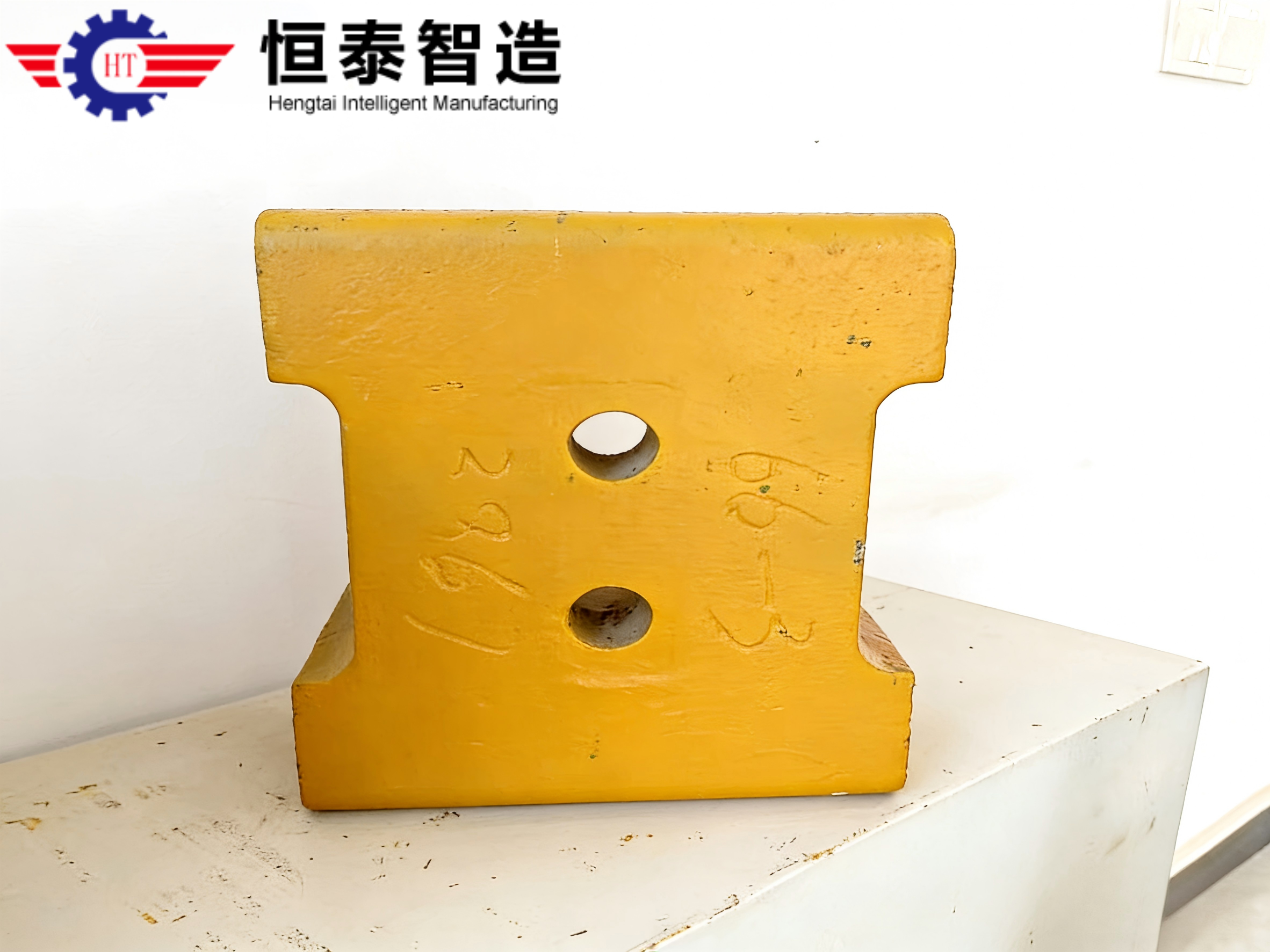
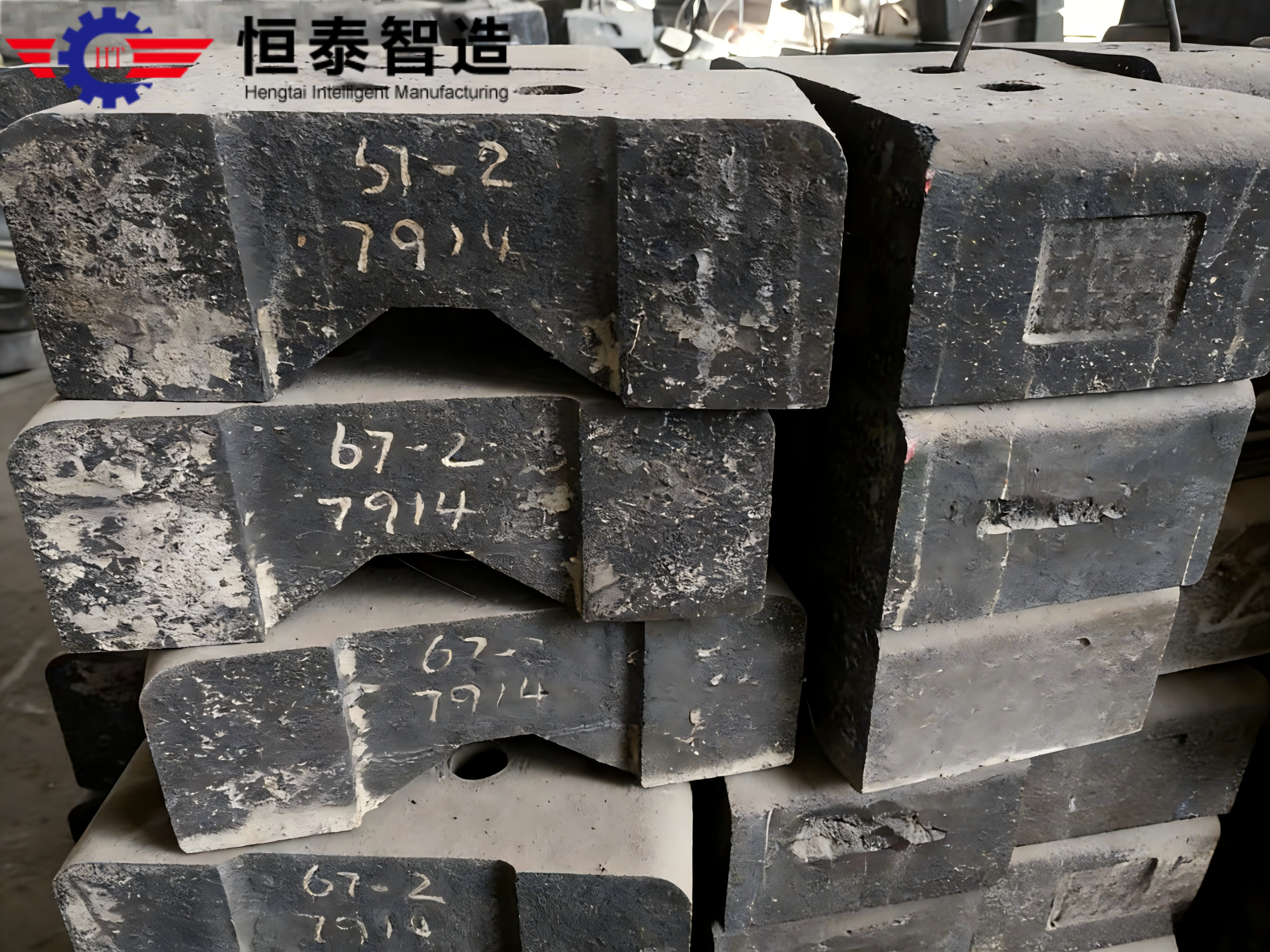
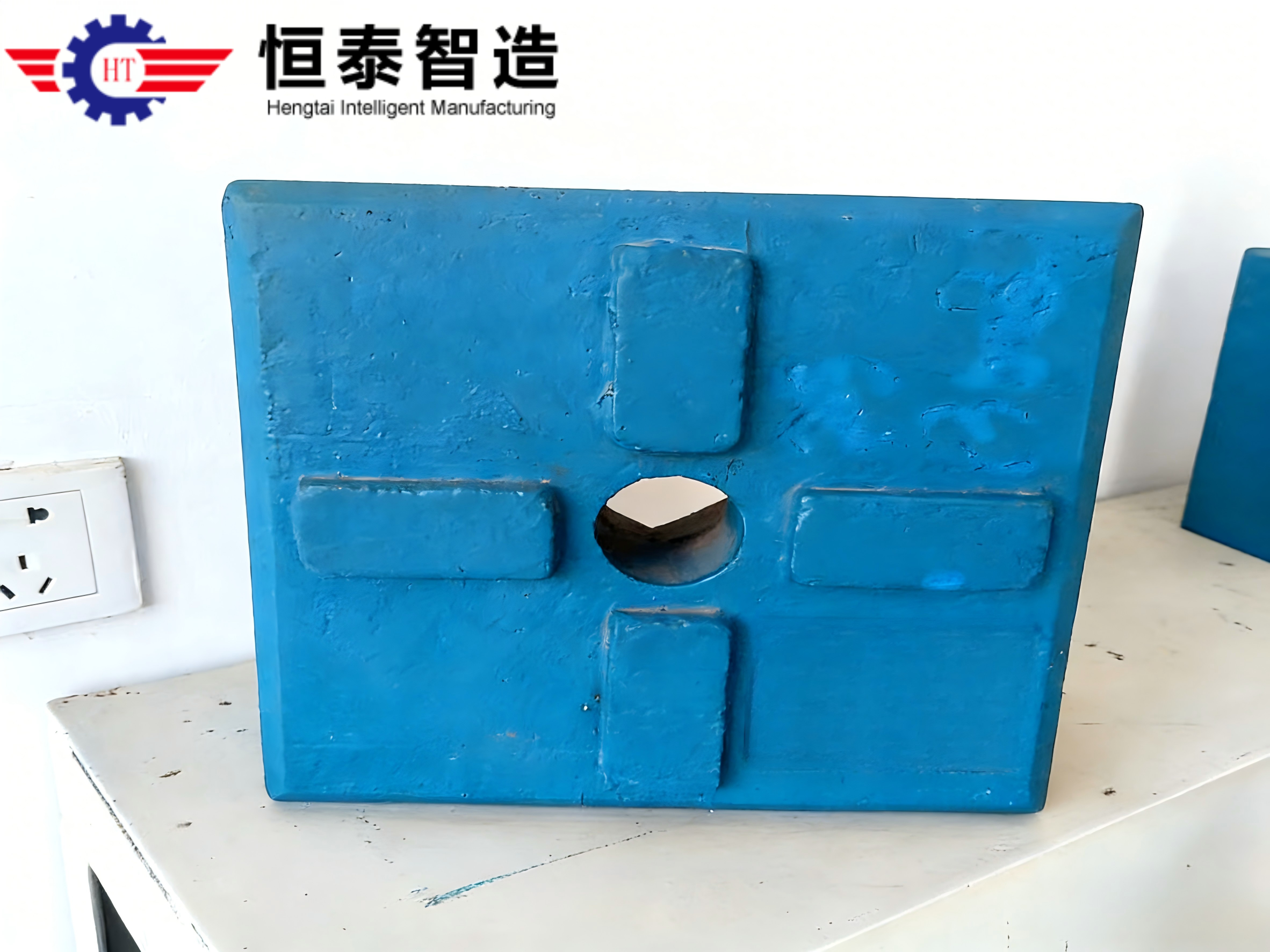
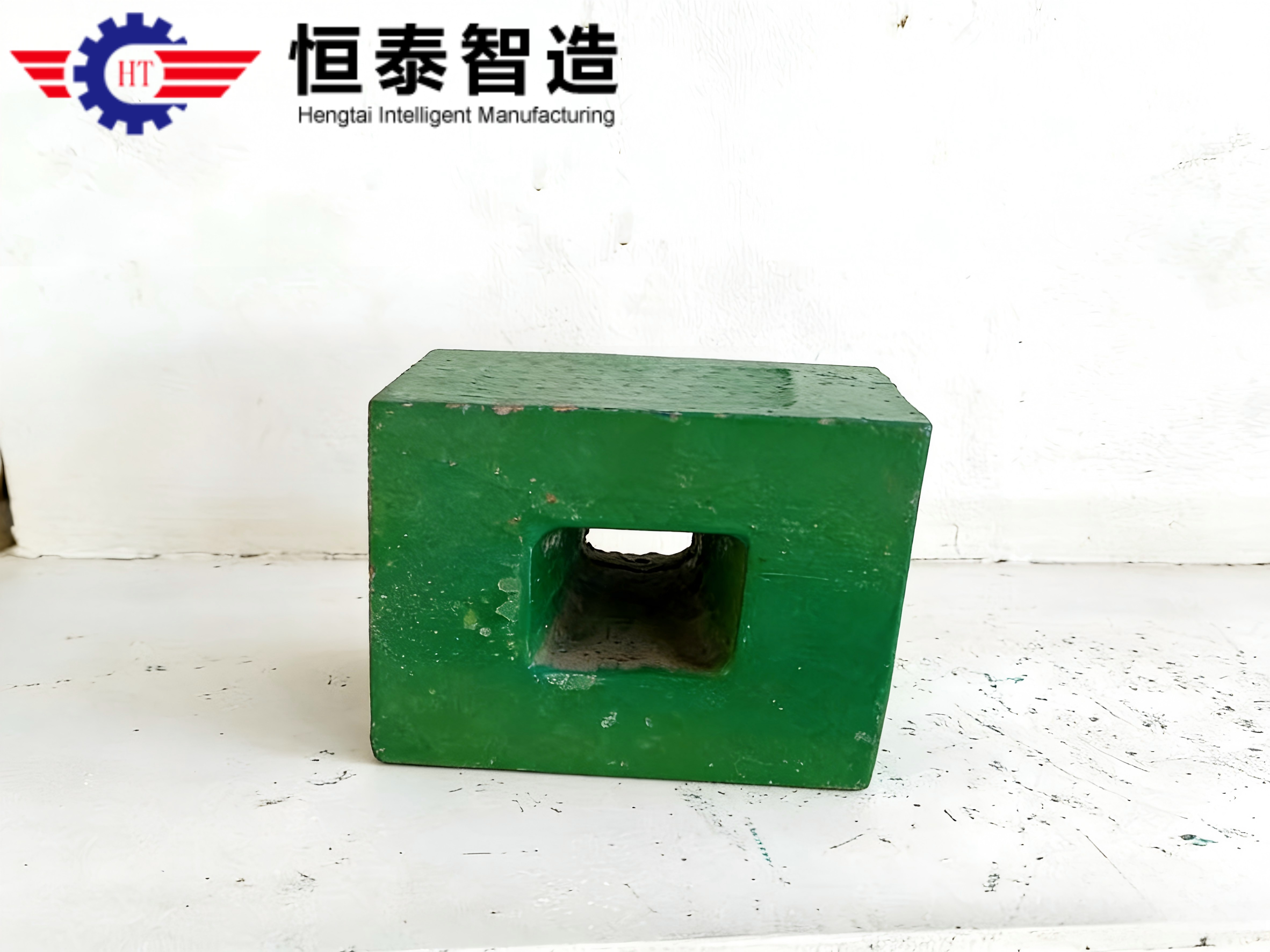
Square Hammer Head for Sand Making Machine
ZGCr28Mo3 High-Chromium Alloy · 3x Service Life · HRC 62-65 Hardness
Product Introduction
The square hammer head for sand making machine is the core wear component that directly determines sand quality, production capacity, and operating cost in vertical shaft impact crushers and hammer sand making machines. In high-wear working conditions processing granite, river pebbles, and basalt, ordinary high manganese steel hammer heads typically fail within 200-400 hours due to rapid abrasion and impact fatigue, causing frequent production stoppages and high replacement costs.
Hengtai ZGCr28Mo3 high-chromium alloy square hammer head is engineered specifically for extreme sand making conditions. With chromium content of ~28%, molybdenum ~3%, plus nickel and rare earth elements, it achieves HRC 62-65 hardness while maintaining superior impact toughness through our proprietary lost foam vacuum suction casting process. The optional bimetallic composite structure combines ultra-hard working faces with high-toughness shanks, delivering 3 times longer service life than conventional high manganese steel hammer heads. Widely recognized by mining and aggregate industries across South America, Middle East, and Southeast Asia.
Core Technology & Structure
Material Composition & Metallurgy
Chromium (Cr): ~28% - Forms hard chromium carbide (Cr₇C₃) microstructure for extreme wear resistance
Molybdenum (Mo): ~3% - Improves high-temperature strength and reduces brittleness of high-chromium alloy
Nickel (Ni): Added to enhance austenite stability and impact toughness
Rare Earth Elements: Refine grain structure, improve casting fluidity and defect resistance
Carbon (C): 2.4-3.2% - Balances hardness and machinability
Casting Process: Lost foam vacuum suction casting ensures dense internal structure, minimal porosity, and consistent mechanical properties throughout the hammer head volume.
Bimetallic Composite Structure
Hammer Head Working Part: ZGCr28Mo3 high-chromium alloy (HRC 62-65) - Provides ultra-high wear resistance against abrasive materials like granite and quartz
Hammer Shank Part: High-toughness low-alloy steel (HRC 35-42) - Absorbs impact forces, prevents fracture at mounting point
Casting Process: Liquid-liquid composite casting with integrated metallurgical bonding - No delamination risk under cyclic loading
Advantage: Perfectly balances ultra-high wear resistance at the working face with impact toughness at the shank, solving the traditional brittleness problem of monolithic high-chromium hammer heads.
Core Performance Advantages
① Ultra-Strong Wear Resistance
- Chromium carbide (Cr₇C₃) hard phase volume fraction >30% in ZGCr28Mo3 matrix
- Molybdenum solid solution strengthening improves matrix hardness and thermal stability
- Hardness reaches HRC 62-65 (vs HRC 50-55 for Mn13 high manganese steel)
- Service life is 3 times longer than ordinary high manganese steel hammer heads under identical granite crushing conditions
- Reduces hammer replacement frequency by 60-70%, minimizing production downtime
② Excellent Impact Resistance
- Molybdenum (3%) effectively suppresses temper brittleness of high-chromium alloy
- Nickel and rare earth elements refine grain size, improving toughness by 25%
- Bimetallic structure creates gradual hardness transition, buffering crushing impact force
- Impact toughness (ak) ≥ 8 J/cm² - prevents catastrophic fracture under overload
- Effectively avoids hammer head fracture and block falling accidents
③ Strong High-Temperature Stability
- Slow hardness attenuation under high-speed friction (surface temp up to 80°C)
- Molybdenum provides solid solution strengthening at elevated temperatures
- Oxidation resistance in humid and high-temperature working environments
- Corrosion resistance against acidic materials (pH >4) in aggregate processing
- Suitable for 24/7 continuous sand making operations in tropical climates
Technical Specifications & Application
Technical Parameters
| Material Grade | ZGCr28Mo3 / Bimetallic Composite |
| Hardness (Working Face) | HRC 62-65 |
| Impact Toughness | ≥ 8 J/cm² |
| Chromium Content | ~28% |
| Molybdenum Content | ~3% |
| Casting Process | Lost Foam Vacuum Suction |
| Service Life vs Mn13 | 3x longer |
| Max Feed Hardness | ≤ 250 MPa (granite) |
| Certification | ISO 9001:2015 |
Recommended Applications
- Hammer Sand Making Machines: PCX series, VSI series vertical shaft impact crushers
- Composite Sand Making Machines: Multi-chamber fine crushing equipment
- Impact Crushers: Secondary and tertiary crushing stages
- Granite Sand Production: 0-5mm artificial sand manufacturing
- River Pebble Processing: High-silica content material crushing
- Basalt Crushing: High-hardness volcanic rock processing
- Quartz Sand Making: Glass and foundry sand production
- Cement Clinker Grinding: Pre-crushing before ball mills
Frequently Asked Questions (FAQ)
Q1: What equipment is the square hammer head suitable for?
Hengtai Square Hammer Head is mainly suitable for hammer sand making machines, composite sand making machines (vertical shaft impact crushers) and some impact crushing equipment, especially for high-wear and high-impact sand making working conditions where traditional high manganese steel hammer heads fail prematurely.
Q2: What are the advantages of ZGCr28Mo3 high-chromium alloy hammer head compared with high manganese steel?
Hengtai ZGCr28Mo3 high-chromium alloy Square Hammer Head has significantly higher hardness (HRC 62-65 vs HRC 50-55 for manganese steel) and superior wear resistance. Its service life is usually more than 3 times that of ordinary high manganese steel hammer heads, and it is especially suitable for crushing high-hardness and high-abrasive materials such as granite and river pebbles.
Q3: What is the hardness range of the square hammer head?
After precision heat treatment (quenching at 950-1050°C and tempering at 200-400°C), the hardness of the working part of Hengtai Square Hammer Head reaches HRC 62-65, which optimally balances wear resistance with sufficient impact resistance for sand making operations.
Q4: Is the high-chromium alloy hammer head prone to fracture?
No. Unlike ordinary high-chromium alloys that are brittle, Shandong Hengtai Intelligent Manufacturing adds molybdenum (3%), nickel and rare earth elements to ZGCr28Mo3 material for Square Hammer Head, and adopts bimetallic composite structure design, which effectively improves the brittleness problem of high-chromium alloy and is not easy to fracture under normal working conditions.
Q5: What is a bimetallic composite square hammer head?
Hengtai bimetallic composite Square Hammer Head adopts liquid-liquid composite casting process: the working part of the hammer head is high-chromium alloy for wear resistance; the hammer shank part is high-toughness low-alloy steel for impact resistance. The two materials are metallurgically bonded in one integral casting, perfectly balancing wear resistance and toughness.
Q6: What materials is the square hammer head suitable for?
Hengtai Square Hammer Head is suitable for sand making and fine crushing of high-hardness and high-abrasive materials such as granite (compressive strength 150-250 MPa), river pebbles, basalt, quartz stone, cement clinker and high-silicon stone.
Q7: Is the performance stable under high-temperature working conditions?
Yes. Hengtai ZGCr28Mo3 high-chromium alloy Square Hammer Head has slow hardness attenuation under high-speed friction and high-temperature environment (surface temp up to 80°C), with good thermal stability and certain oxidation resistance, suitable for long-time continuous operation.
Q8: How often does the square hammer head need to be replaced?
The replacement cycle of Hengtai Square Hammer Head depends on material hardness, feed particle size (should be <80mm for optimal life), equipment speed and operating hours. Under the same working conditions, its service life is usually more than 3 times that of ordinary high manganese steel hammer heads, typically 800-1500 operating hours for granite, significantly reducing shutdown replacements.
Q9: Is customization available for square hammer heads?
Yes. Hengtai can carry out custom production of Square Hammer Head according to customer equipment models, dimension drawings and actual working conditions, including single-piece prototyping, small batch testing, and mass production. Typical delivery time: 15-30 days depending on quantity and complexity.
Q10: How to extend the service life of the square hammer head?
To maximize Hengtai Square Hammer Head lifespan: (1) Control feed particle size to <80mm and remove metal impurities; (2) Maintain uniform feed distribution to prevent single-sided wear; (3) Replace hammer heads in complete sets to maintain rotor balance; (4) Check wear patterns regularly and rotate hammers to even out wear; (5) Ensure proper rotor speed to reduce impact fatigue.
Contact Us
For Customization Quotation, Technical Parameters or Model Matching of Hengtai Square Hammer Head
Phone/WhatsApp: +86 182 8866 4797 (Ni Bin)
Email: ht6234nibin@gmail.com
Address: Intelligent Equipment Manufacturing Industrial Park, Linyi High-tech Zone, Linyi City, Shandong Province, China
Service Commitment: Free Technical Consultation | Customized Solutions | Sample Testing | OEM Production Support
Warranty: Material Defect Warranty | Quality Certification | On-time Delivery Guarantee