
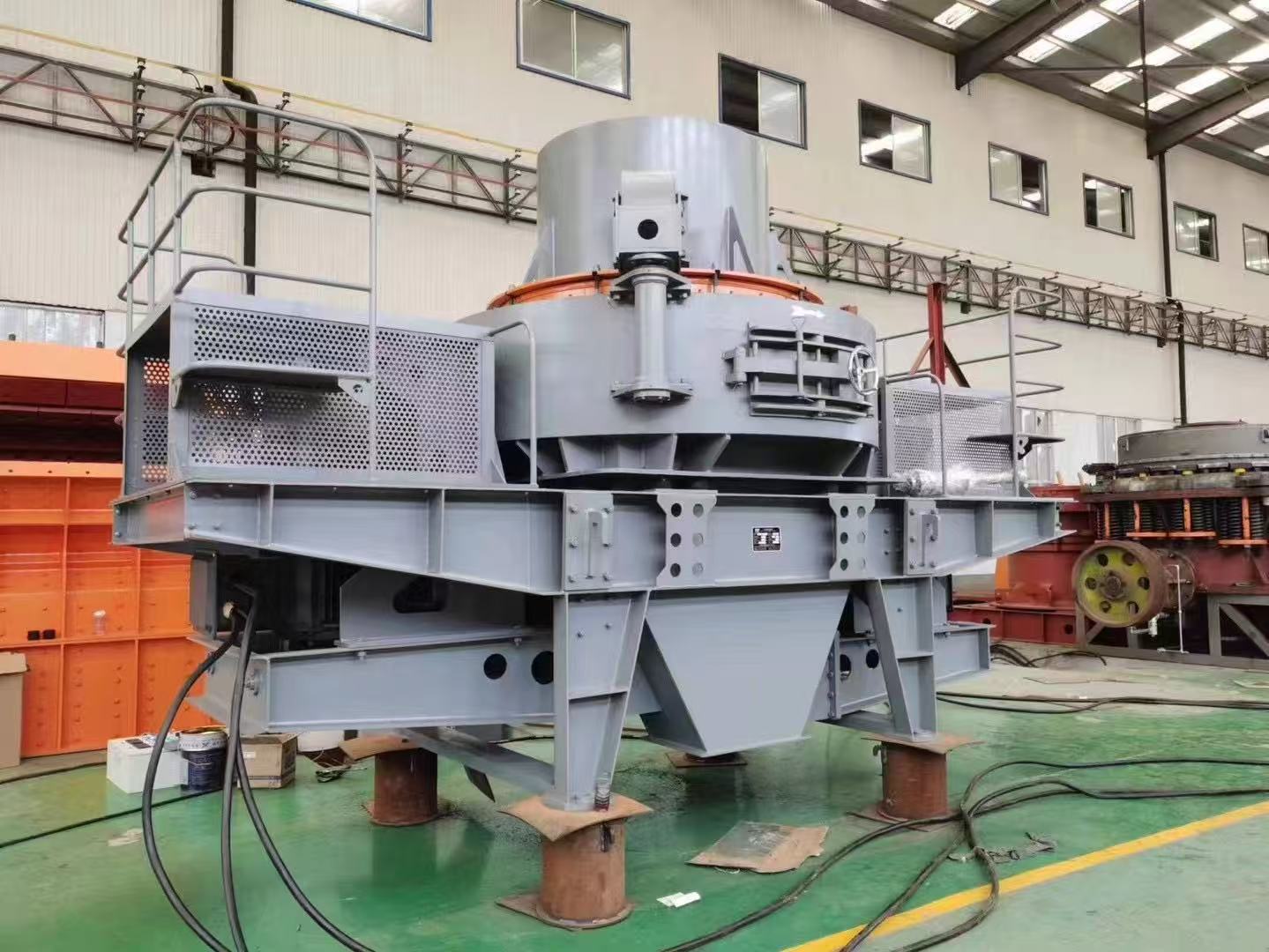
Sand making process flow
Our engineer can customize specific solutions according to your requirements
Capacity:200-1000 TPH sand washing process combination (wheel sand washer + spiral sand washer)
I. Core equipment configuration
This set of efficient sand washing process combination, ranging from 200 to 1000 tons/hour, adopts a core architecture of "pre-treatment + deep cleaning + precise grading". With wheel sand washers and spiral sand washers as the core processing units, it specifically addresses the cleaning challenges of sand materials with high mud content and multiple impurities, ensuring the cleanliness and grading quality of the finished sand. The core equipment configuration is as follows:
- Linear vibrating feeder: It achieves uniform and quantitative feeding of sand materials, preventing overload of sand washing equipment and ensuring stable process flow
- Multi-layer vibrating screen: pre-classification pretreatment, separating oversized impurities and unqualified sand materials, improving sand washing efficiency
- Wheel-type sand washer: one of the core cleaning equipment, utilizing the principle of impeller rubbing + water flow rinsing, with low fine sand loss rate, high cleanliness, no vulnerable parts except for the screen mesh, and low maintenance cost
- Spiral sand washer: the second core cleaning equipment, relying on spiral blade agitation and grinding, excels in deep desliming, is suitable for sand materials with high mud content, and achieves excellent dewatering effect
- Belt conveyor: Connects various processes, completes sand material transfer, and can be flexibly arranged according to process requirements
- Dewatering screen (optional): further reduces the moisture content of the finished sand, optimizing storage and transportation conditions
- Centralized electrical control system: achieving full-process automated operation and monitoring, reducing manual intervention
- Water circulation treatment system (optional): It realizes the recycling and reuse of sand washing water, reduces sewage discharge, and meets environmental protection requirements
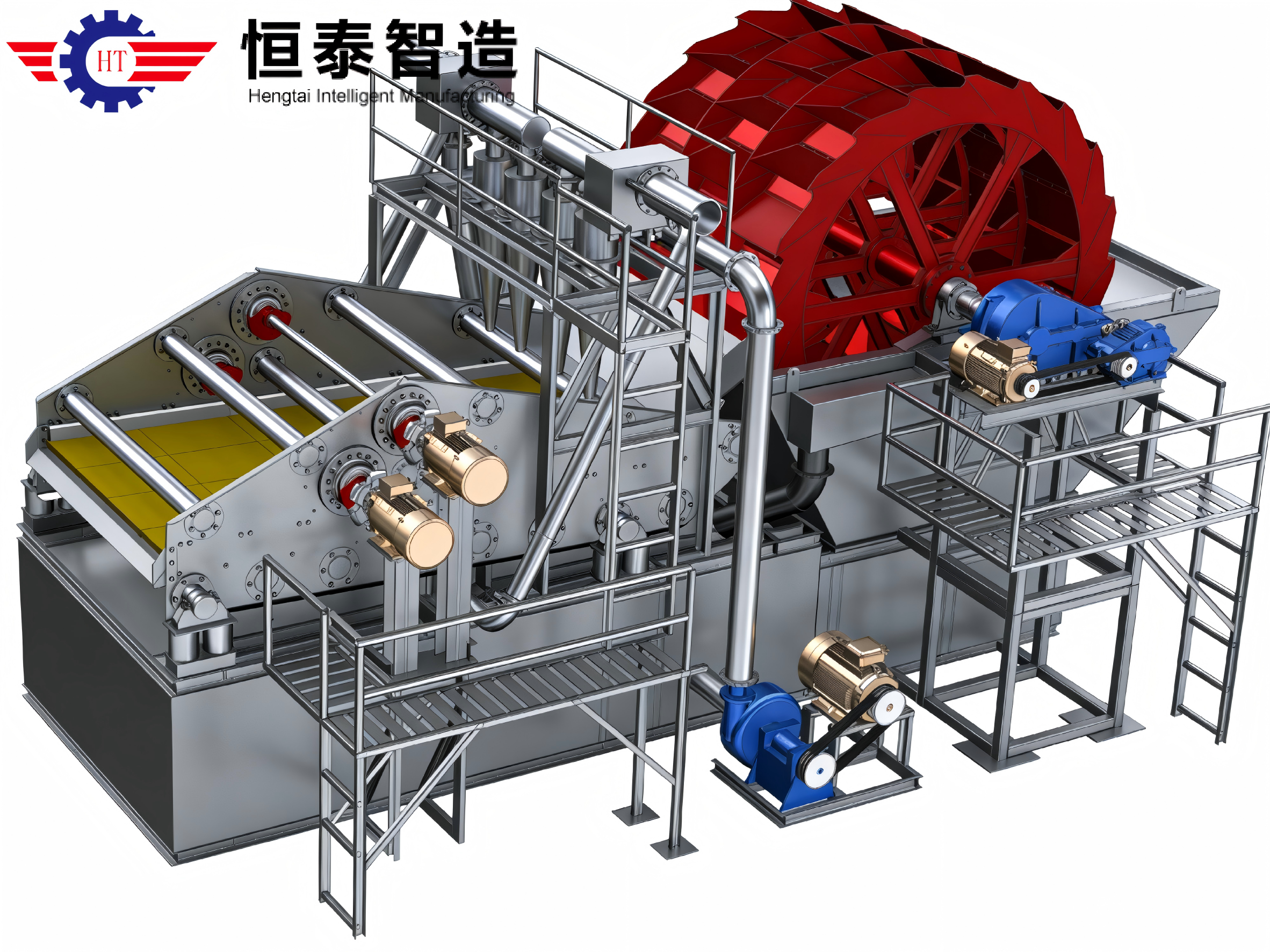
II. Introduction to the core of process combination
This 200-1000 TPH sand washing process combination, centered around the collaborative operation of a "wheel sand washer + spiral sand washer", is an intelligent sand washing system that integrates sand pre-treatment, graded cleaning, deep desliming, and dewatering and drying (optional). This combination breaks through the processing limitations of a single sand washer, leveraging the complementary advantages of the two devices to accommodate various raw materials such as natural sand, machine-made sand, and construction waste recycled sand. It can efficiently process various types of sand with a silt content ranging from 5% to 30%, accurately producing clean sand that meets the national "Building Sand" standard.
Finished clean sand is widely used in high-standard infrastructure and building material production projects such as highways, high-speed railways, large bridges, water conservancy hubs, commercial concrete mixing stations, prefabricated component factories, and high-rise buildings. At the same time, it meets the sand purification needs of various fields such as sand and gravel plants, mining, and construction waste recycling, fully aligning with the industrial development trend of green building material production and resource recycling, and helping enterprises enhance product competitiveness and environmental compliance capabilities.
III. Detailed Process Flow
1. Raw material feeding and pretreatment stage: The sand to be cleaned is transferred to the raw material silo by a loader and evenly fed to a multi-layer vibrating screen by a linear vibrating feeder. The vibrating screen performs graded screening on the sand, separating out oversized stones and impurities, while classifying the sand into different particle size ranges. Unqualified coarse materials can be returned to the crushing system (if equipped), and qualified sand enters the subsequent sand washing process.
2. Primary cleaning stage (wheel sand washing): After grading, the sand enters the wheel sand washing machine. The motor drives the impeller to rotate slowly, causing the sand to tumble and rub under the impeller's drive, while high-pressure water continues to flush. Impurities such as soil and dust on the surface of the sand are quickly stripped away, and fine sand is fully retained due to the special structure of the impeller, reducing the loss of finished products. Impurities and sewage are discharged through the overflow port, completing the preliminary cleaning and grading.
3. Secondary cleaning stage (spiral sand washing): The sand material, which has been preliminarily cleaned by the wheel sand washer, is conveyed into the spiral sand washer via a belt conveyor. The spiral blades drive the sand material to move along the tank, where the sand particles grind against each other, further stripping off residual mud films and fine impurities. Simultaneously, clear water is injected to form a powerful water flow, which thoroughly carries away the impurities and foreign objects with a lower specific gravity, achieving deep de-mudding and cleaning, and ensuring the cleanliness of the finished sand.
4. Dewatering and drying stage (optional): The cleaned and qualified sand material enters the dewatering screen, where high-frequency vibration is used to quickly reduce the moisture content of the sand, ensuring that the moisture content of the finished sand is controlled below 8%, meeting the requirements for storage, transportation, and subsequent use. The sewage generated during dewatering enters the water circulation treatment system, where it is precipitated, filtered, and recycled for reuse, achieving water resource recycling and reducing environmental pressure.
5. Finished product stacking stage: The dehydrated clean sand is conveyed to the finished product stockpile via a belt conveyor and can be sorted and stacked according to particle size requirements, facilitating subsequent retrieval, use, and sales. The entire process is automatically controlled through a centralized electrical control system, which monitors the operating status of each equipment and the sand washing effect in real time.
IV. Core Advantages of Process Combination
- This combined process of "wheel sand washer + spiral sand washer", leveraging the synergistic advantages of the equipment and scientific process design, possesses the following core competitiveness compared to single sand washing processes,
1. Excellent cleaning effect and qualified finished product quality: The wheel-type sand washer efficiently removes impurities and retains fine sand, while the spiral sand washer deeply removes mud and enhances cleanliness. After dual cleaning, the finished sand has a mud content of ≤1%, with continuous and reasonable gradation, regular particle shape, and fully complies with the national "Building Sand" standard. The loss rate of fine sand is less than 3%, and the recovery rate of finished products is increased by 10%-15% compared to single sand washing equipment.
2. High-capacity stable operation with a wide range of adaptability: Precisely designed for production needs ranging from 200 to 1000 tons/hour, the core equipment exhibits strong synergy and can be flexibly adjusted according to actual production capacity. It is suitable for various raw materials such as natural sand, machine-made sand, and recycled sand, and can process various types of sand materials with a silt content ranging from 5% to 30%. Whether it's pebble sand making and washing, granite machine-made sand purification, or construction waste recycled sand cleaning, it can stably adapt to these processes.
3. Intelligent energy saving and low operation and maintenance costs: Equipped with a centralized electrical control system, it achieves full-process automated operation, eliminating the need for real-time manual supervision and significantly reducing labor costs. The wheel sand washer has no wearing parts except for the screen, ensuring a long service life. The spiral sand washer adopts wear-resistant lining plates, resulting in minimal wear. An optional water circulation system can be equipped, reducing water consumption by over 40% and energy consumption by 20%-30% compared to traditional sand washing processes, offering significant long-term operation and maintenance cost advantages.
4. Green and environmentally friendly, with strong policy adaptability: Equipped with a dedicated sewage collection and treatment system, it achieves the recycling of sand washing water, reduces sewage discharge, and avoids environmental pollution. The production line can be equipped with dust collection equipment to effectively control dust emissions, meeting domestic and international green production standards and environmental protection policy requirements, and helping enterprises successfully pass environmental protection inspections.
video
Customer Review
The Hengtai Smart Manufacturing's production line, consisting of jaw crusher, cone crusher, VSI impact crusher, and sand washing equipment for sand and gravel aggregates, is known as the "golden configuration" in the mining and building materials industries. The integrated production line of crushing, sand making, and sand washing achieves seamless connection throughout the entire process from coarse crushing, medium and fine crushing, sand making and shaping to sand washing. The production capacity of each process matches precisely with the needs of large-scale production, ensuring not only efficient conversion of ore raw materials but also high-quality finished products.
The finished sand and gravel have a reasonable particle size gradation and excellent cleanliness, fully meeting the stringent standards for high-grade concrete and road construction materials. This directly enhances the market competitiveness of our end products and helps expand our customer base in the infrastructure sector.
In terms of adaptability to application scenarios, this set of equipment performs far beyond expectations. Whether it's crushing hard rocks such as granite and basalt, or large-scale sand making operations for limestone, the equipment can maintain a stable operating state. Since its commissioning, even under high-load operation for an average of 12 hours per day, the failure rate of core components remains extremely low, significantly reducing unplanned downtime and operation and maintenance costs.
Crucially, this solution has saved us considerable costs for the upgrading and modernization of our old production lines. The Hengtai technical team fully considered the current status of the old production lines during the design phase. By optimizing equipment layout and reengineering the process flow, we achieved a 30% increase in production capacity without the need for additional expansion of space. This effectively controlled the overall transformation costs and shortened the investment return period.
From pre-sale on-site survey and customized scheme design, to in-sale installation and debugging, technical operation training, and to post-sale regular inspection and quick parts supply, Hengtai's full-process service is professional and efficient. When encountering equipment parameter optimization challenges during peak production periods, engineers rushed to the site overnight for debugging, quickly solving the urgent production needs.
Request Detailed Solution & Quote
Shandong Hengtai Intelligent Manufacturing Equipment Technology Co., Ltd.
Tel/WhatsApp: +86 182 8866 4797
Email: ht6234nibin@gmail.com
Address: Intelligent Equipment Manufacturing Industrial Park, High-Tech Zone, Linyi City, Shandong Province, China