
Crawler Mobile Crushing Station
Track-Mounted Self-Propelled Portable Crushing Plant | Hammer · Jaw · Impact · Cone Configurations | Diesel or Electric Power | Wireless Remote Control
The Hengtai crawler mobile crushing station is a high-efficiency, self-propelled crushing system built on a full-steel track chassis. Unlike wheel-mounted portable crushers that need flat, paved access roads, this crawler-type design handles soft ground, slopes, and rough terrain with ease — the wide-footprint tracks distribute the machine's weight across a large surface, protecting asphalt and soft soil from damage during repositioning.
Once on site, the operator activates the system via wireless remote control and production begins within 30 minutes. No concrete pad, no crane erection, and no external power connection when the onboard diesel generator is used. The machine can move and crush simultaneously, eliminating secondary haulage of raw feed material and dramatically reducing truck cycles and fuel cost in quarry and demolition operations.
The integrated closed-loop circuit — vibrating feeder → crusher → vibrating screen → oversized return conveyor — guarantees that every tonne of feed material is processed to specification before leaving the machine. Six interchangeable crusher head configurations allow the same platform to be redeployed for different material types and product specifications, protecting your capital investment across multiple project cycles.
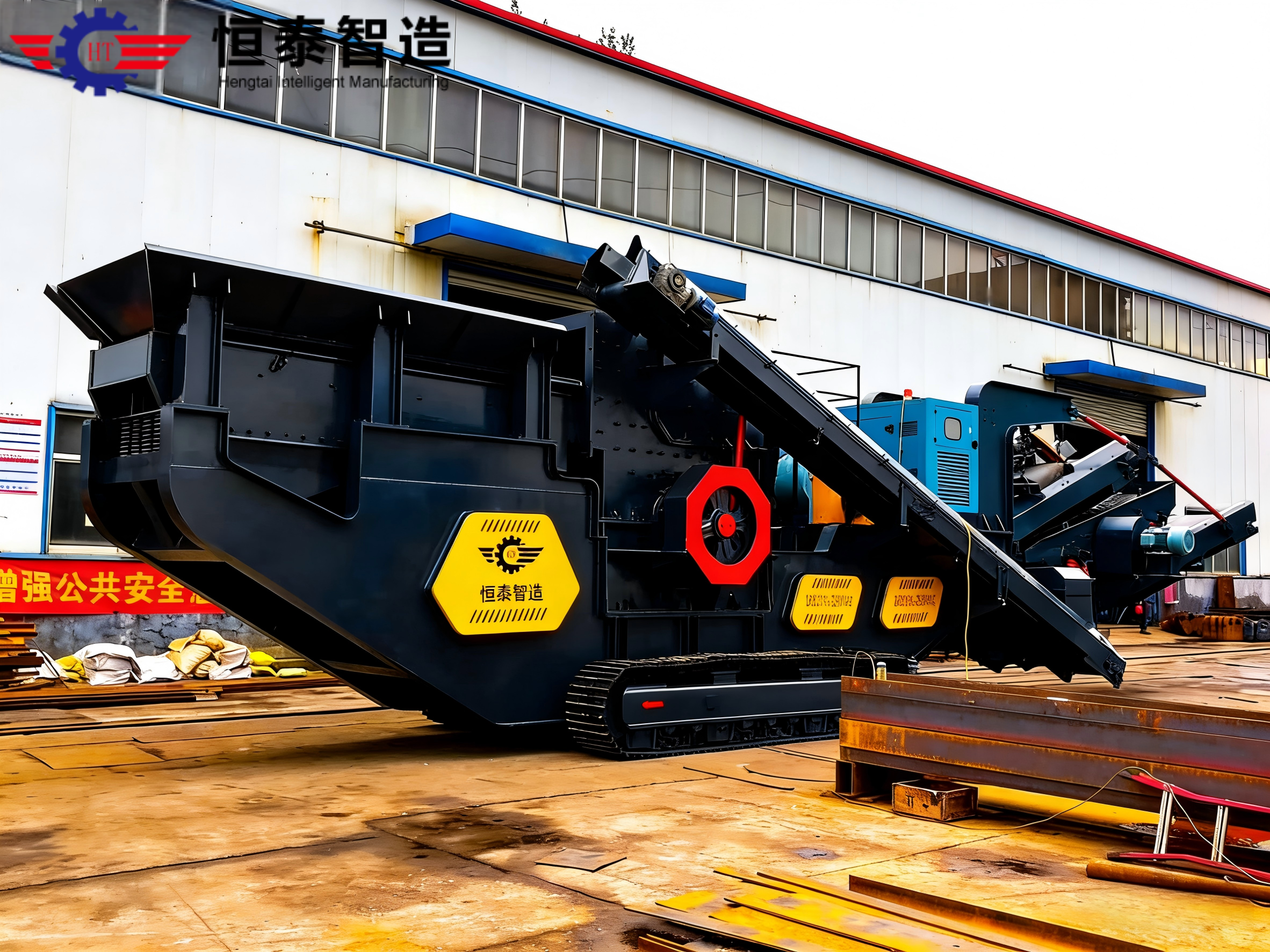
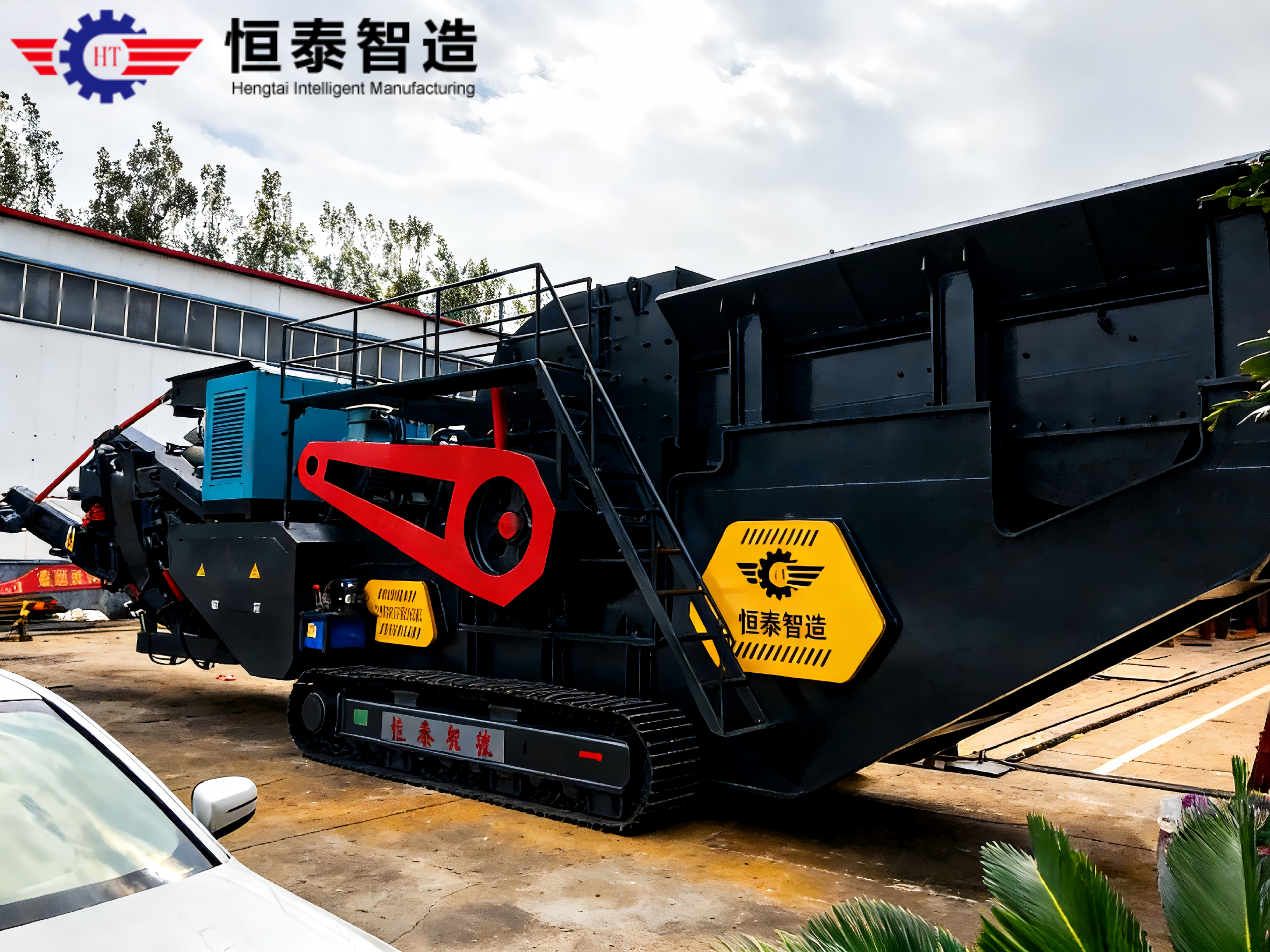
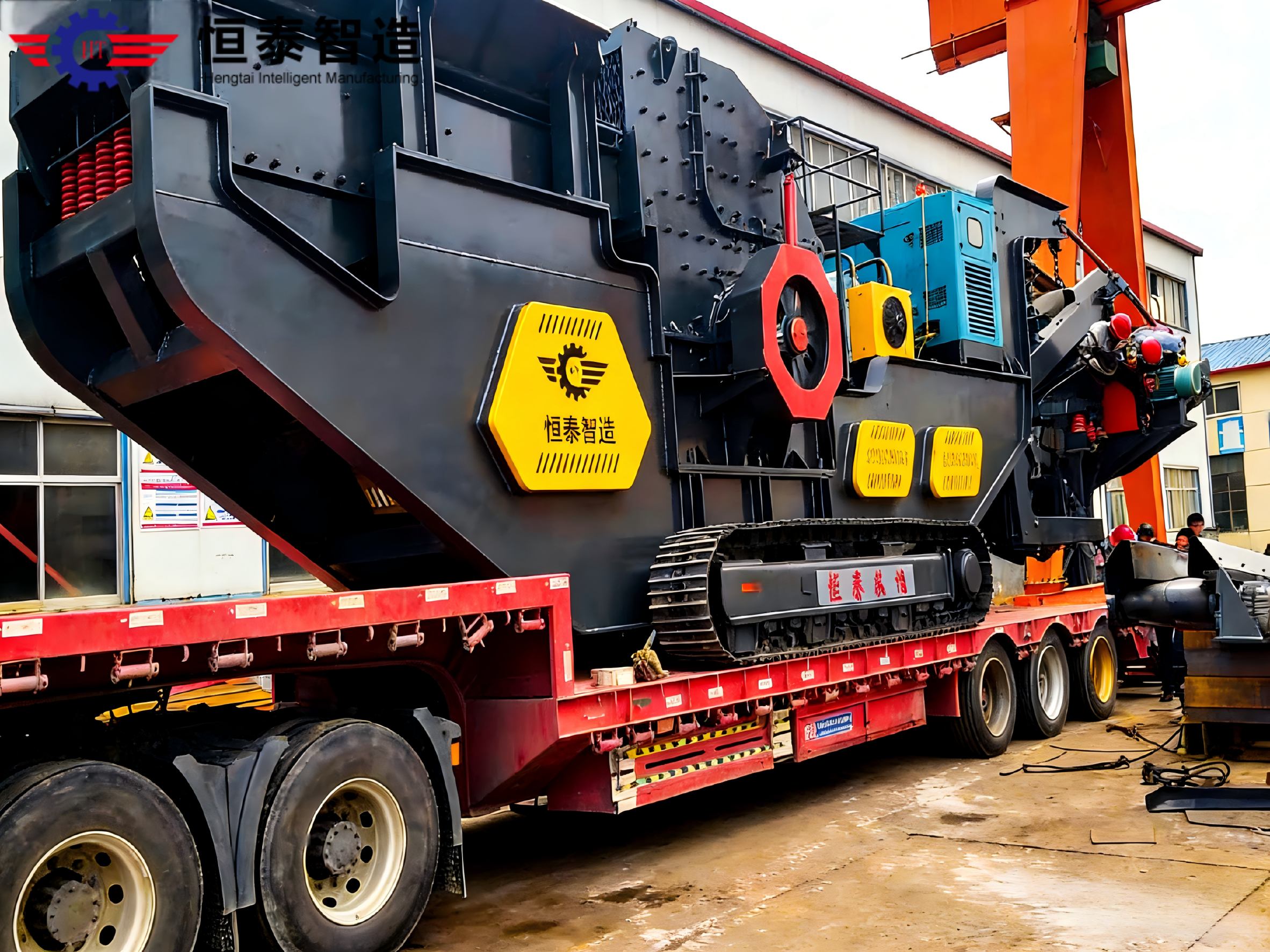
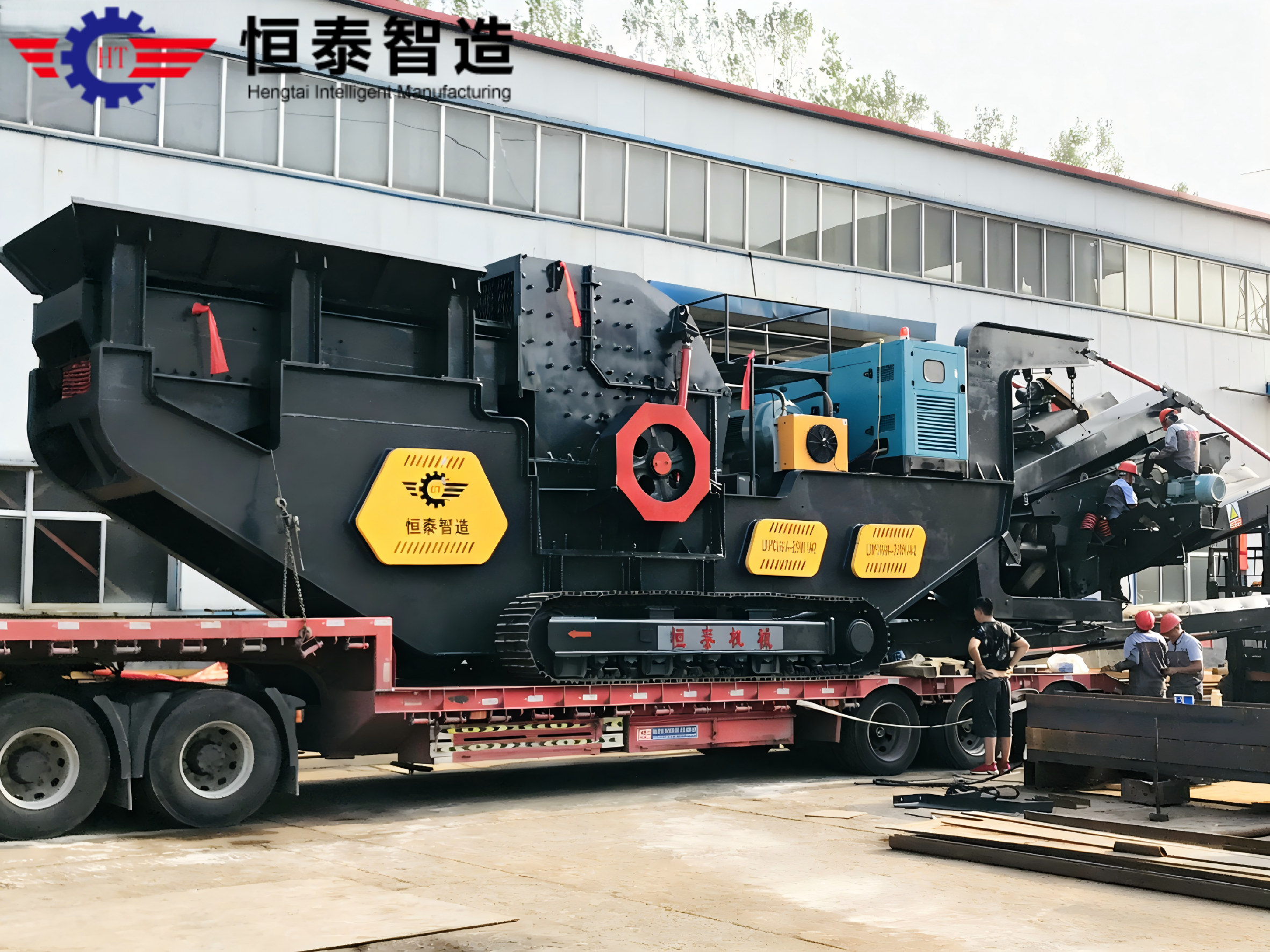
Crawler Mobile Crushing Station – Layout & Site Application
Real-world engineering layouts and heavy-duty field deployment configurations for the self-propelled tracked crushing fleet:
Operational Video Demonstration
See the complete workflow: rock feeding, hammer crushing, vibrating screen classification, and finished aggregate stockpiling — all on a single track-mounted chassis.
Core System Components & Working Principle
Four integrated subsystems on one chassis — no inter-equipment haulage, true mobile aggregate production.
Primary Crushing System — Vibrating Feeder + Heavy Hammer Crusher: The heavy-duty vibrating feeder meters raw feed material evenly into the crusher at a controlled rate. Its front grizzly bars pre-screen fines and soil, reducing wear on the main crusher and boosting throughput. The heavy hammer crusher serves as the "heart" of the station — it achieves primary and secondary reduction in a single pass, a key advantage over multi-stage fixed plant lines.
Screening System — High-Efficiency Vibrating Screen: Classifies crushed material into multiple specification grades simultaneously. Oversized material is automatically returned via the recirculation conveyor to the crusher inlet, forming a closed-circuit loop that guarantees product conformity without manual intervention. The screen can be paired with any crusher head configuration on the same platform.
Conveying System — Main Discharge Belt + Recirculation Belt:
Main Discharge Conveyor
Carries finished specification aggregate from the screen deck to a designated stockpile area outside the machine footprint.
Recirculation (Return) Conveyor
Automatically returns oversize material from the screen back to the crusher inlet. This closed-loop design eliminates manual sorting and guarantees continuous, stable production without operator intervention.
Power System — Diesel Engine or External Electric Connection: The onboard diesel genset provides fully independent power for remote sites — demolition yards, open-cast mines, or riverside quarries — where grid connection is unavailable. Where site power is accessible, the external electrical connection mode cuts fuel cost by up to 40% and reduces on-site emissions, making it the preferred choice for urban demolition and aggregate recycling operations.
9 Advantages Over Conventional Fixed Crushing Plants
Engineering decisions that directly reduce your operating cost and increase site flexibility.
All-Terrain Crawler Chassis
Full-steel vessel-hull chassis with extremely low ground pressure. Travels on soft soil, slopes, and unpaved surfaces without road preparation.
No Foundation, No Assembly
Hydraulic leg-free slope-work design. Production starts within 30 minutes of arrival — no civil works, no crane, no fixed infrastructure needed.
On-Site Material Processing
Crush at the quarry face or demolition zone — eliminates secondary haulage trucks and reduces logistics cost on every shift.
Wireless Remote Control
Full machine movement, feed rate, and safety stops operated by wireless controller. Positions itself onto a transport truck without an operator on the machine.
Closed-Loop Recirculation
Oversized material automatically returned from the screen to the crusher inlet. 100% of output meets specified gradation — no manual sorting required.
Uniform Cubical Product Shape
High reduction ratio and optimised hammer geometry produce cubical aggregate particles with minimal flakiness — ideal for asphalt, concrete, and railway ballast.
Easy Maintenance Access
Hydraulic-opening rear crusher housing gives full access to the rotor and liners without dismantling the structure. Hammer changes are faster and safer.
Smart PLC Control System
Intelligent automation monitors load, temperature, and vibration in real time. Automatic protection circuits prevent overload damage to the crusher and screen systems.
Flexible Power Supply
Onboard diesel generator for off-grid autonomous operation anywhere. External electric connection option where grid power is available, reducing operating cost up to 40%.
5 Industries Where Crawler Mobile Crushers Excel
Engineered for operations that demand frequent repositioning and on-site material size reduction.
Quarrying & Mining
All mine rock types — granite, basalt, limestone, sandstone. Tracks the working face as the quarry advances.
Construction Waste Recycling
House demolition, bridge removal, road base recycling. Converts concrete rubble into reusable aggregate on-site.
Asphalt & Concrete Mixing
Supplies pre-crushed, sized aggregate directly to mixing stations, eliminating a stockpile handling step.
Coal Mining
Processes ROM coal and rejects at the pit face. Compact footprint suits confined surface coal operations.
Harsh Environment Sites
Open-pit mining, hillside quarries, flood plain operations — conditions that wheel-mounted plants cannot reach.
Technical Specifications & Performance Parameters
All models are available in standard configuration. Equipment type can be matched and combined according to project requirements.
| Crusher Type | Model / Size Range (mm) | Motor Power (kW) | Typical Application |
|---|---|---|---|
| Heavy Hammer Crusher | 1414 · 1614 · 1616 · 1816 | 160 / 220 / 250 / 280 | Limestone, concrete waste, coal — soft to medium-hard rock, one-pass primary + secondary |
| Jaw Crusher | 600×900 · 750×1060 | 75 / 110 | Hard rock primary crushing — granite, basalt, iron ore |
| Cone Crusher (Multi-Cylinder Hydraulic) | 1350–1650 | 250 | Secondary & tertiary fine crushing — highly abrasive hard rock |
| Impact Crusher (PF Series) | 1214 · 1315 · 1515 | 132 / 200 / 280 | Medium-hard rock, recycled concrete, cubical aggregate production |
| Vibrating Screen | 1860–2480 | 22 / 30 / 45 | 2–4 fraction classification — paired with any crusher configuration |
Note: Model selection depends on required production capacity, feed material hardness, and finished gradation specification. European CE-standard model variants are available on request. Contact our engineers for a site-specific configuration recommendation.
Frequently Asked Questions
Common operational and technical questions about crawler mobile crushing stations. Contact our engineers for site-specific advice.
The most likely cause is a fault in the track drive system — a defective drive motor, a jammed crawler chain, or a broken track link. Power down the machine immediately, inspect the motor status and track connections, and replace any damaged components before resuming operation. If the drive motor is suspected, check the hydraulic pressure line and motor contactor first.
Particle size is controlled by two mechanisms: (1) replacing the vibrating screen mesh with a finer or coarser specification; (2) adjusting the hydraulic gap between the impact plates or grate bars inside the crusher head. Reducing the gap produces finer output; increasing it produces coarser output. On hydraulically adjusted models, this is done in minutes from the operator panel — no manual shimming required.
Sudden noise increases are usually caused by heavily worn rotor hammers or blow bars, or by foreign objects (steel rebar, machine parts) entering the crushing chamber. Stop the machine immediately. Open the hydraulic rear cover, inspect the rotor hammers and liner plates for excessive wear, and clear any foreign debris from the crushing cavity before restarting. Continued operation with worn hammers risks damage to the rotor shaft and frame.
Operation in heavy rain is not recommended. Wet ground reduces crawler traction and mobility stability. Rainwater entering motor windings or the electronic control cabinet can cause insulation failure or short circuits. If rain-weather operation is unavoidable, install weatherproof covers over the control system and motor terminal boxes, and conduct a ground stability assessment before repositioning the machine on wet slopes.
Hammer head service life ranges from 3 to 12 months depending primarily on the hardness and silica content of the material being crushed. When processing medium-hardness materials such as limestone, hammer life is typically 6–8 months under continuous operation. Each hammer head is designed with 3–4 usable wear surfaces — rotate the hammer to a fresh surface before replacement to maximise cost-per-tonne performance and reduce spare-parts expenditure.
Interchangeable Crusher Head Options & Related Products
The crawler platform accepts multiple crusher head configurations. The same base machine can be redeployed for different material types and product specifications across project cycles.
Get Technical Catalog & Factory Price Quote
Our engineers customise solutions tailored to your project requirements, target capacity, feed material type, and local site conditions. Response within 24 hours.