
PFW Series European Type Hydraulic Impact Crusher
Heavy-Duty Rotor | Crescent Blow Bars | Spring Safety Device | Hydraulic Top-Opening
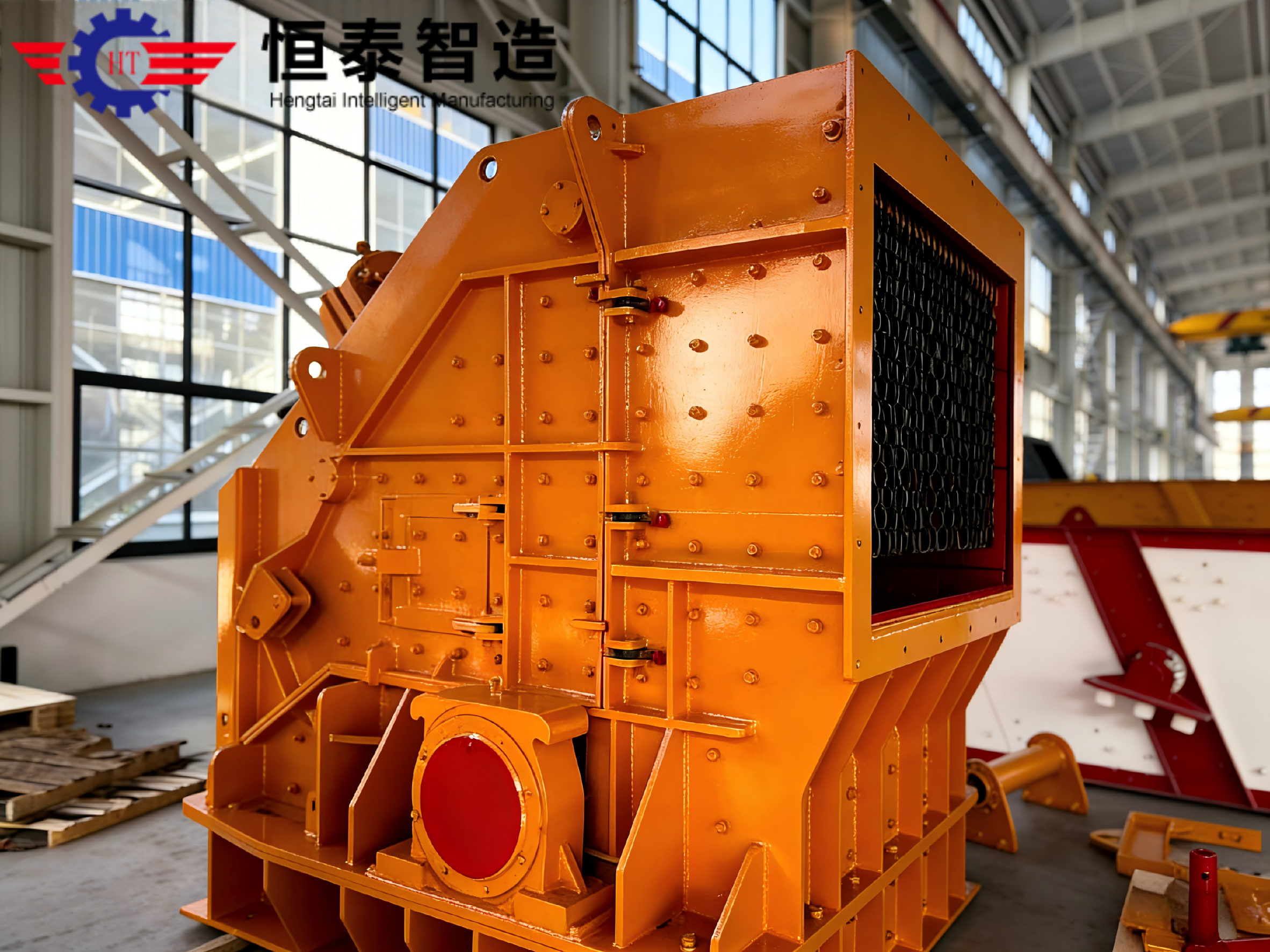
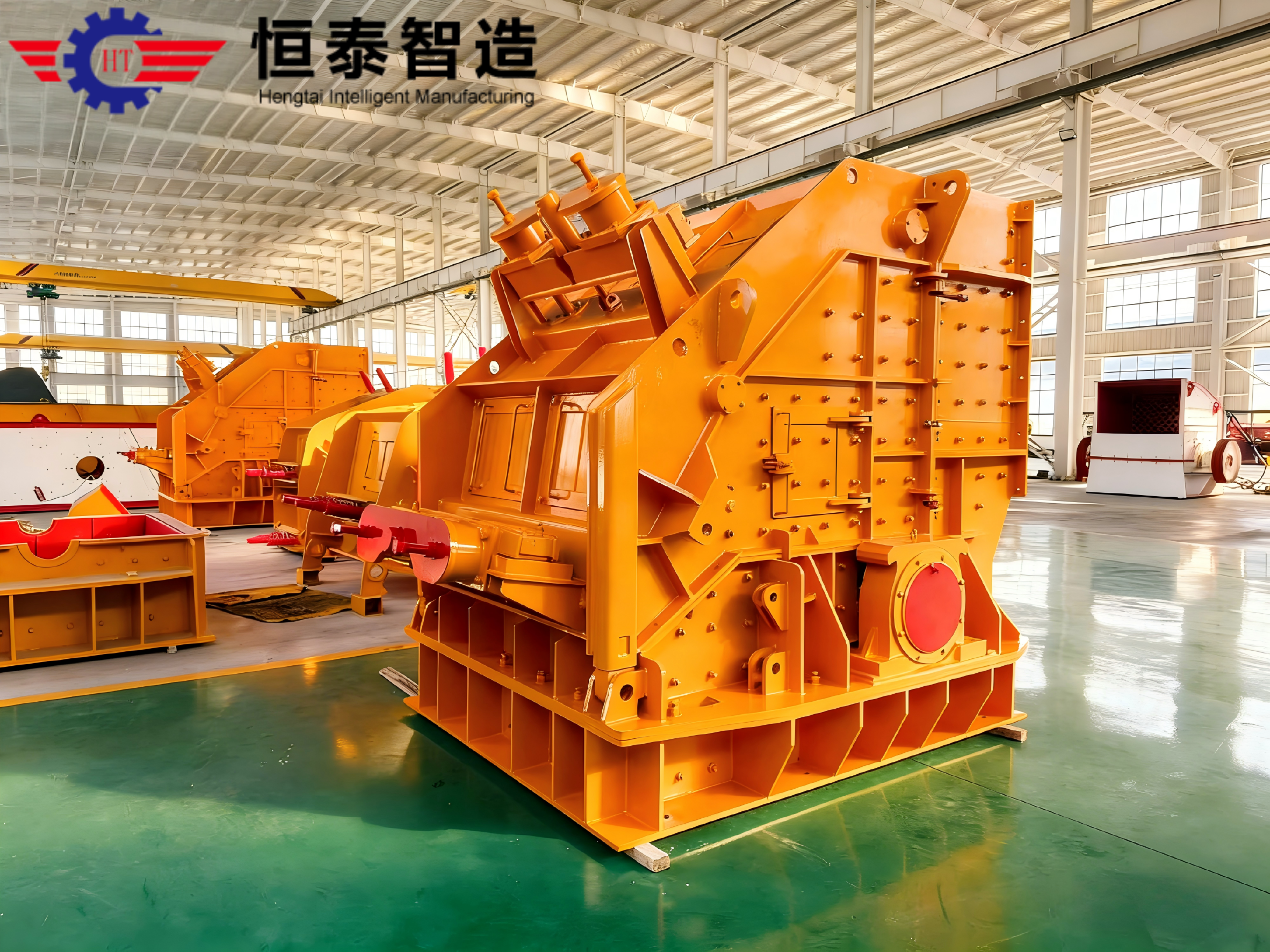
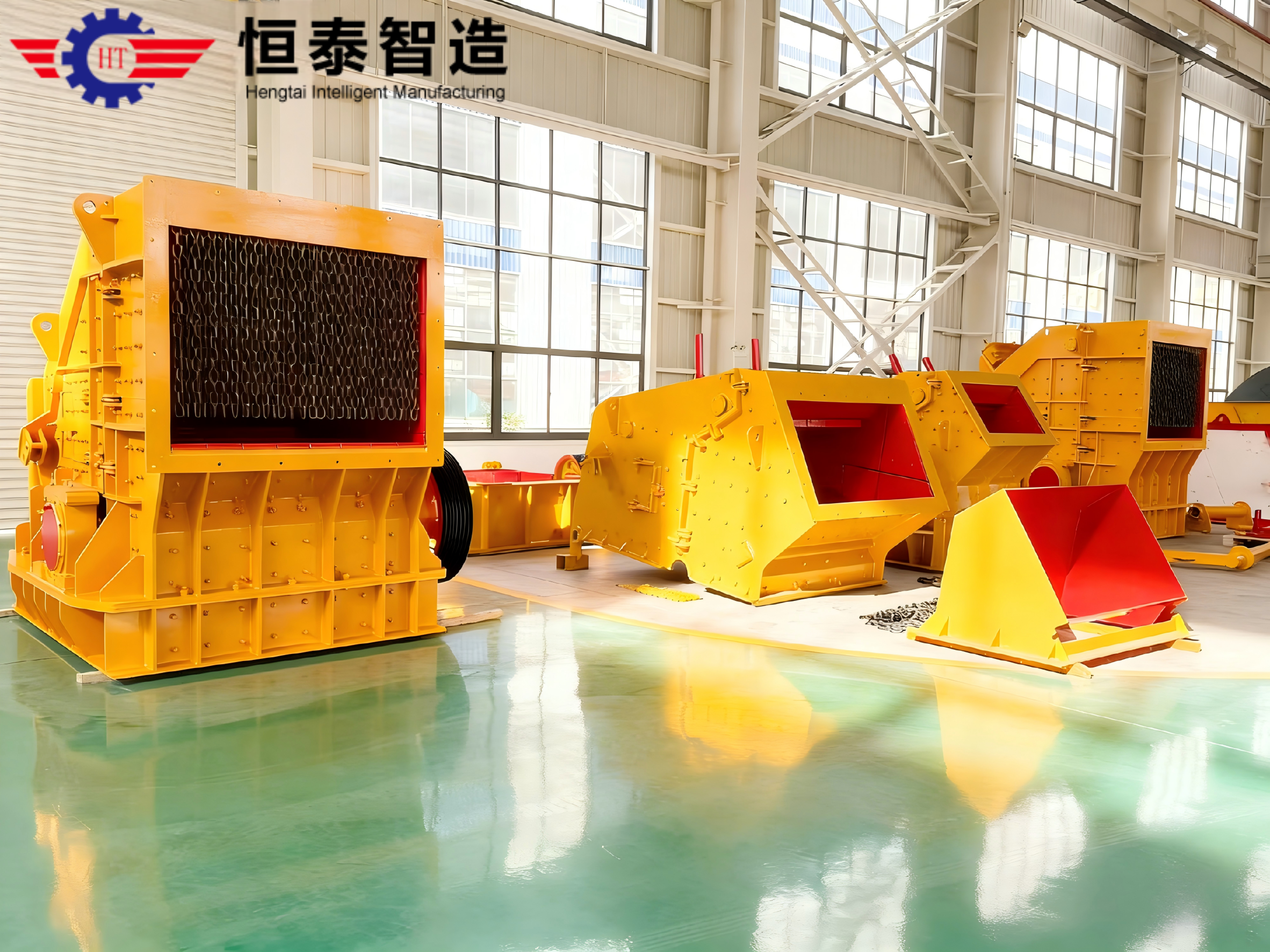
The PFW Series European Type Hydraulic Impact Crusher, developed by Shandong Hengtai Intelligent Manufacturing Equipment Technology Co., Ltd., is the latest generation of impact crushing equipment engineered by absorbing current international advanced impact crusher technology and manufacturing it to globally competitive quality standards. World-class manufacturing processes and the highest-grade materials are applied throughout, with a heavily reinforced rotor design and strict quality inspection protocols ensuring consistently superior rotor performance.
The rotor is the "heart" of any impact crusher—it is also the component subjected to the most stringent acceptance inspection. To achieve the highest rotational inertia, greater crushing force, and superior crushing efficiency, we developed and produce a structurally robust heavy-duty rotor. Combined with ultra-wear-resistant blow bar materials and an optimized crushing chamber geometry, the result is a machine that consistently outperforms standard impact crushers in both efficiency and service life.
Key Structural Advantages: Integral cast steel bearing housings, unique wedge-block blow bar fixing, an improved adjustment mechanism that minimizes shutdown time, a built-in hydraulic top-opening device for rapid wear-part replacement, larger-specification bearings for higher load capacity, and full rotor dynamic analysis ensuring stable and reliable long-term operation.
Product Gallery
Operational Video Demonstration
Crushing Working Principle
High-Velocity Primary Impact: Material enters the blow bar action zone where high-speed rotating blow bars deliver powerful kinetic impact, fracturing large stone blocks in a single strike. The heavy-duty rotor's elevated rotational inertia amplifies impact force beyond what conventional rotors can achieve.
Multi-Stage Rebound Crushing: Fractured fragments are thrown at high velocity against the impact plates installed above the rotor, achieving secondary size reduction. Particles then rebound back into the blow bar action zone for further crushing. This multi-stage impact-rebound cycle continues until material reaches the target particle size.
Controlled Discharge & Size Adjustment: Crushed material meeting the required size exits from the bottom discharge opening. The gap between the impact frame and rotor frame is adjusted hydraulically—changing this setting directly controls both the discharge particle size and product shape without stopping production.
Core Performance Features
Heavy-Duty Rotor Design
The heavy-duty rotor is fabricated from welded steel plate to achieve maximum rotational inertia, greater crushing force, and superior crushing efficiency compared to conventional rotor designs. Multi-directional dynamic analysis and strict inspection protocols ensure every rotor meets consistently high quality and performance standards before leaving the factory.
Integral Cast Steel Bearing Housing
The bearing housing adopts a monolithic cast steel structure, ensuring perfect fit with the crusher frame. This design increases radial load capacity, improves anti-load performance, and accommodates larger-specification bearings with higher load ratings—extending bearing service life significantly in continuous heavy-duty operation.
Crescent-Shaped Blow Bars
The crescent profile alters the impact angle and increases effective striking surface area, delivering higher crushing efficiency and longer service life versus standard rectangular blow bars. Blow bars are secured by a wedge-block axial limiting device: the faster the rotor rotates, the tighter the blow bar is held—simultaneously making installation and removal faster and safer.
Constant-Pressure Spring Safety Device
The impact plates are protected by a constant-pressure spring safety mechanism. When uncrushable tramp metal enters the crushing cavity, the front and rear impact frames automatically retreat, allowing the foreign object to discharge from the machine. Normal crushing operation resumes automatically, eliminating machine seizure risk. The wave-pattern impact frame design provides enhanced resistance to both impact and abrasive wear.
Hydraulic Top-Opening Device
The hydraulic top-opening mechanism (hinged frame cover) allows the entire crushing chamber to be opened quickly without manual disassembly. Blow bars and other wear parts are replaced rapidly, and discharge particle size adjustment is completed in a fraction of the time required by conventional designs—significantly reducing labor hours and production downtime.
Applicable Materials & Industries
Industries: Aggregate quarries, mining, coal processing, concrete batching plants, dry-mixed mortar, power plant desulfurization, quartz sand production.
Materials: River pebble, granite, basalt, iron ore, limestone, quartz, diabase, and similar medium-to-hard rock types.
Technical Specifications
| Model | Rotor Diameter × Width (mm) | Feed Opening (mm) | Max Feed Size (mm) | Capacity (t/h) | Motor Power (kW) | Dimensions L×W×H (mm) |
|---|---|---|---|---|---|---|
| PFW1210 Ⅱ | φ1150 × 960 | 1100 × 1030 | 400 | 90 – 160 | 90 – 110 | 2400 × 1870 × 2550 |
| PFW1214 Ⅱ | φ1150 × 1400 | 1100 × 1430 | 500 | 130 – 200 | 132 – 160 | 2400 × 2310 × 2550 |
| PFW1315 Ⅱ | φ1300 × 1500 | 1200 × 1530 | 600 | 180 – 320 | 160 – 200 | 2700 × 2570 × 2800 |
| PFW1318 Ⅱ | φ1300 × 1800 | 1200 × 1830 | 700 | 240 – 400 | 200 – 250 | 2700 × 2870 × 2800 |
| Model | Rotor Diameter × Width (mm) | Feed Opening (mm) | Max Feed Size (mm) | Capacity (t/h) | Motor Power (kW) | Dimensions L×W×H (mm) |
|---|---|---|---|---|---|---|
| PFW1210 Ⅲ | φ1150 × 960 | 570 × 990 | 250 | 70 – 120 | 90 – 110 | 2550 × 1870 × 2100 |
| PFW1214 Ⅲ | φ1150 × 1400 | 570 × 1430 | 250 | 90 – 170 | 132 – 160 | 2550 × 2310 × 2100 |
| PFW1315 Ⅲ | φ1300 × 1500 | 625 × 1530 | 300 | 180 – 270 | 160 – 200 | 2960 × 2570 × 2380 |
| PFW1318 Ⅲ | φ1300 × 1800 | 625 × 1830 | 300 | 220 – 300 | 200 – 250 | 2960 × 2870 × 2380 |
* Type Ⅱ = Primary / coarse secondary crushing, large feed opening. Type Ⅲ = Secondary / fine crushing, smaller feed opening for tighter discharge control. Custom configurations available on request.
Frequently Asked Questions
Type Ⅱ is configured for primary or coarse secondary crushing with a larger feed opening (up to 700mm max feed) and higher throughput (up to 400 TPH). Type Ⅲ is optimized for secondary fine crushing with a narrower feed opening, producing finer and more uniform discharge sizes (70-300 TPH) for aggregate finishing and close-circuit screening applications.
The constant-pressure spring safety device allows the front and rear impact frames to retreat automatically when uncrushable objects such as steel bolts or metal fragments enter the crushing cavity. The foreign object is discharged from the machine and the impact frames return to their set operating position, eliminating machine seizure risk without any manual intervention or production stoppage.
The hydraulic top-opening device (hinged frame cover) opens the entire crushing chamber in minutes without tools or manual frame removal. Combined with the wedge-block blow bar fixing system, full blow bar replacement is typically completed in under 2 hours—significantly less than the 6-8 hours required by conventional impact crusher designs.
Discharge size is adjustable by changing the gap between the impact frame and the rotor frame. Typical output is 0-31mm for secondary crushing applications. The multi-stage impact-rebound crushing mechanism produces excellent cubical aggregate geometry with low needle-flake content, meeting GB/T 14685 and equivalent international aggregate standards.
Service life depends on feed hardness and abrasiveness. For limestone applications: approximately 800-1,200 hours. For granite and basalt: 400-700 hours. The crescent-shaped profile and wear-resistant high-chrome alloy material maximize service intervals. All four working edges of each blow bar are usable before replacement.
Standard models (PFW1210–PFW1318): 30-45 days. Custom configurations or special blow bar alloy grades: 60-75 days. Factory acceptance inspection and on-site commissioning support are available for all orders.
Typical Production Line Configuration
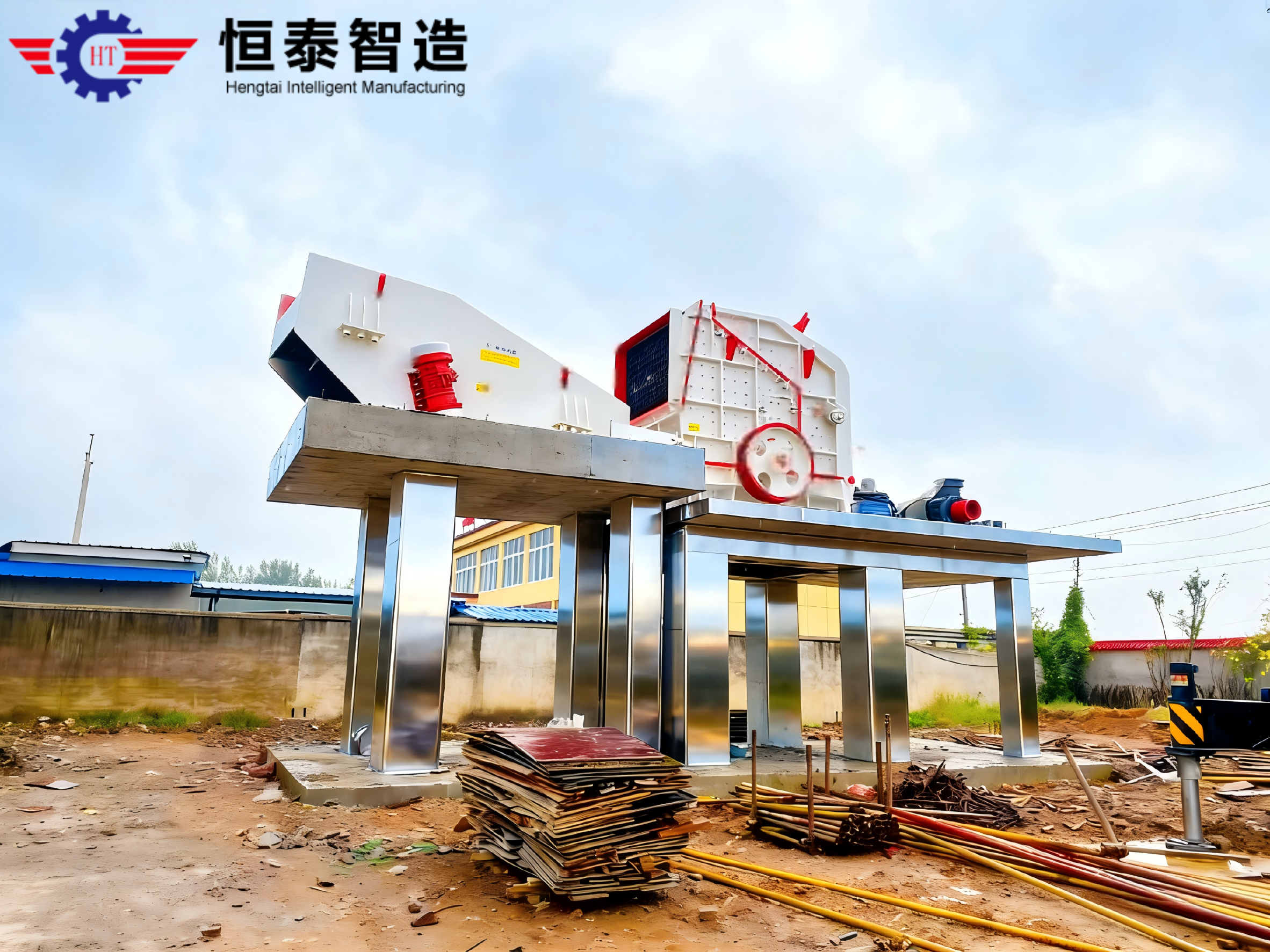
Configure the PFW crusher into a complete primary or secondary crushing and screening system with matched Hengtai equipment:
PRIMARY CRUSHING LINE PFW (primary crusher) + Feeder + YK Vibrating Screen
SECONDARY CRUSHING LINE Primary crusher → PFW (secondary crusher) for finer product
Get Professional Technical Catalog & Factory Price Quote
Our engineers will recommend the right PFW model and production line configuration based on your feed material, target capacity, required discharge size, and site conditions.